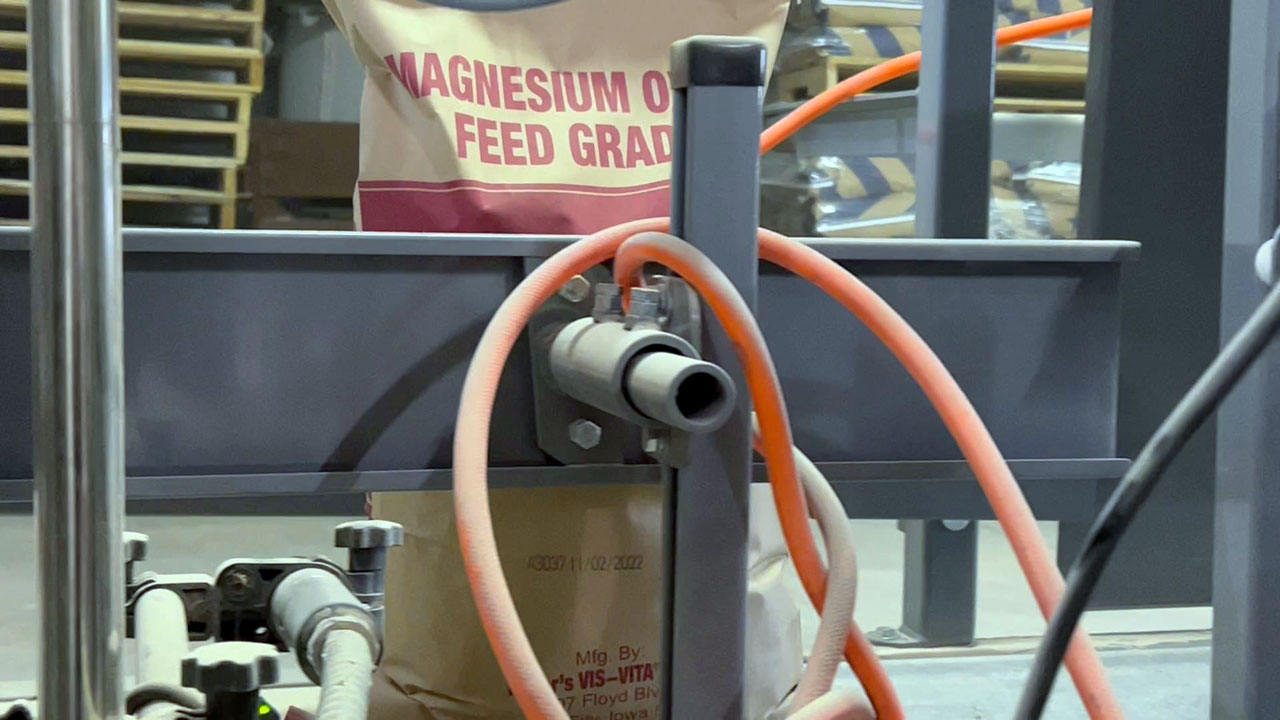
Lot code, batch number, and date printed on bottom part of bag after passing by print head on bag closing conveyor
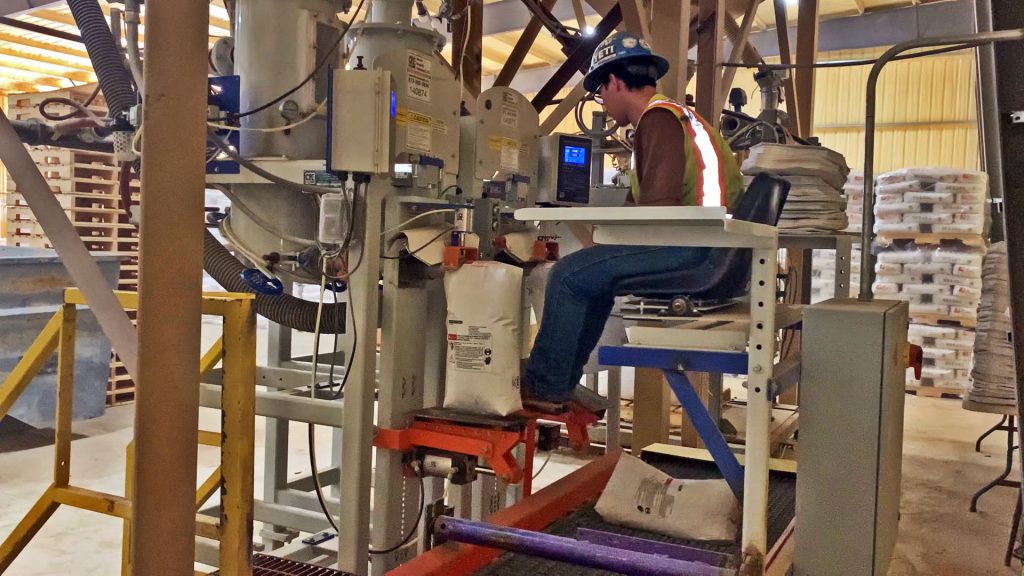
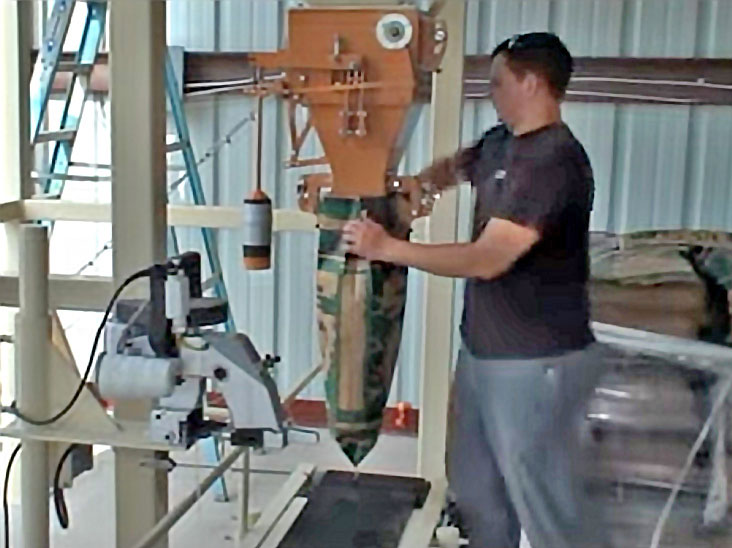
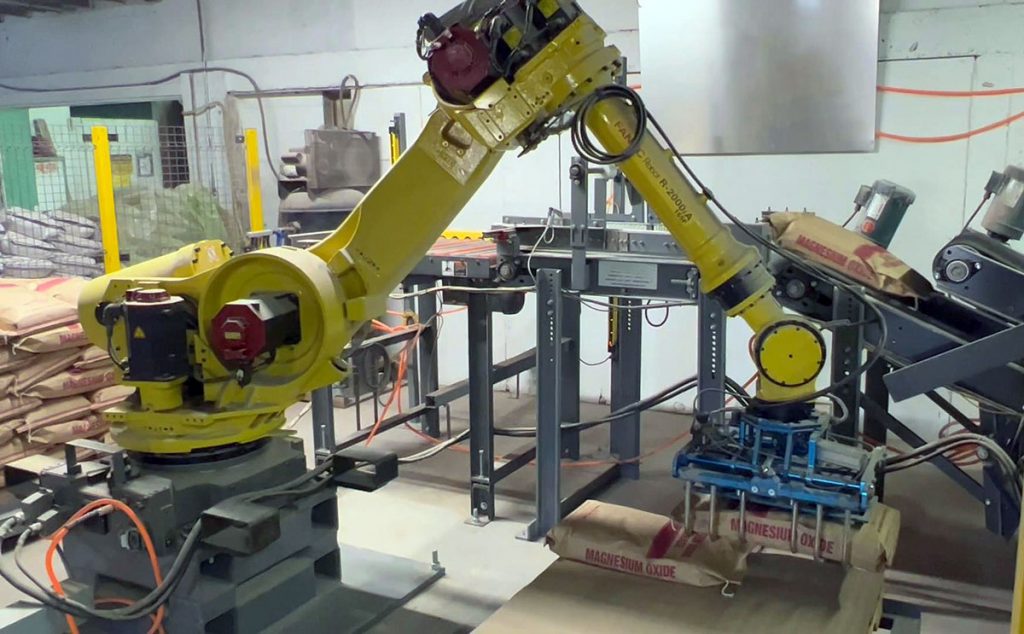
This lot code printer was put to the test in an animal feed and minerals packaging line. Multi-wall open mouth paper bags, filled with animal feed are sewn shut. Then, they pass in front of the lot code printer on a conveyor before robotic palletizing. As each bag passes the lot code printer, a lot code and date are printed on the bottom part of the bag. Each of these unique codes helps to identify the date when the batch of product was produced and packaged.
These valve bag filling machines are used to fill 50 Lb. paper valve bags with different types of high-quality silica sand. After filling, bags are conveyed to an automatic palletizer that stacks the bags on a pallet.
This type of silica sand is a high-quality round and sub-round silica sand with mesh sizes ranging between 8×16 and 100. It has many uses including:
turf sand used for infill to protect artificial turf and increase its life expectancy
roofing sand for specialty roofing tiles, flooring titles, and colored grout
building and industrial sands as an ideal base for construction, concrete, bricks, foundry, and flooring
water filtration sand used in wells, filters, and other water fixtures
The Grain and Corn Bagging System combines product storage, filling, and bag closing into one system. Efficiently fill and close 30-50 lb. paper and poly-woven open mouth style bags.
The system has been engineered for bagging deer corn (whole corn), feed, seed, and other grains. The manual, or mechanical, bagging option includes automatic weighing. The system is upgradeable to a higher packaging speed with the addition of a high-speed bag sewing system to quickly close the bags. Additional options are available including hand held bag sewing machines, bag flattening conveyors, and bag stacking systems.
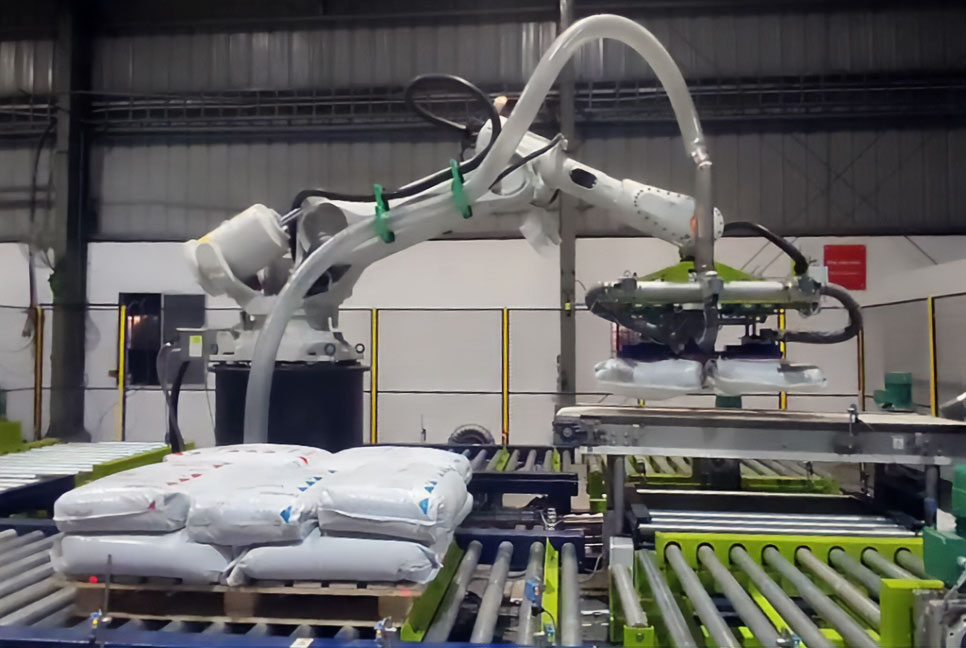
Automating the stacking, or palletizing, of bags at the end of a packaging line with a used robotic palletizer can provide a fast return on investment. Robotic palletizers can be oriented in any direction to accept bag inflow from a new or existing bagging system. They minimize the risk of repetitive injuries caused by stacking heavy bags on shipping pallets, while simultaneously reducing labor and staffing requirements.
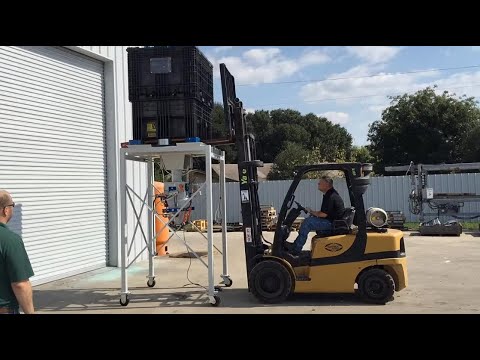
Filling bulk bags with animal feed or seeds can range from a semi-automatic to a fully automated process. These types of bulk bag filling machines are designed to fill an open spout or duffel top bulk bag with granular, free-flowing, or semi-free flowing materials like corn, grains, nuts, rice, fertilizer, salt, dry sand, plastic pellets, and more.
This automated IBC discharge system empties battery powder from one intermediate bulk container into an empty IBC under a nitrogen purge. This type of powder handling system is used during the battery manufacturing process.
This automatic drum palletizer robot uses an arm to pick up and stack drums on shipping pallets. The end-of-arm tool can be adjusted, and the stacking pattern can be re-programmed to easily accept different types and sizes of drums. The robot is also set up to stack the drums with the labels pointing in the same direction.
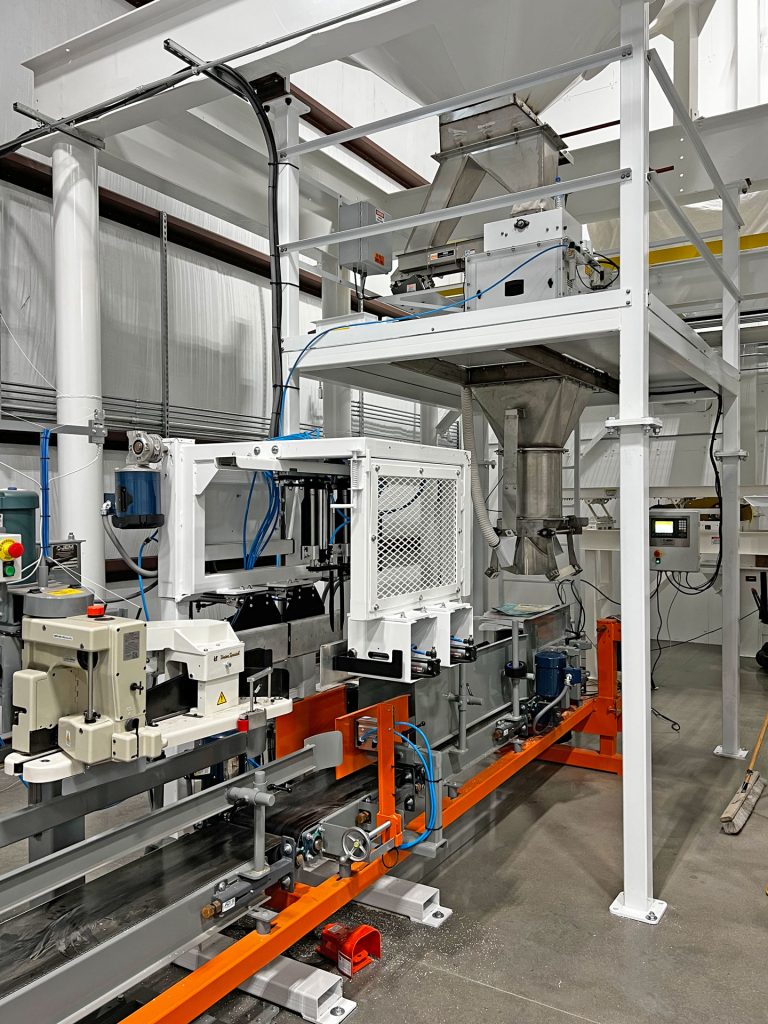
This 25 lb. open mouth bagging system is for sale. It has been lightly used and is in good working condition. It can be used to fill 25 lb. open mouth bags or smaller. Feed the system with material by discharging from an existing mixer, bulk bag unloader, or other types of conveying systems. The system includes a belt fed net weigh bagging scale which allows it to handle moderately flowing products like animal feed with molasses, crumbled feed, rice bran, rice hulls, crumb rubber, or specialty aggregates like aquarium or sands.
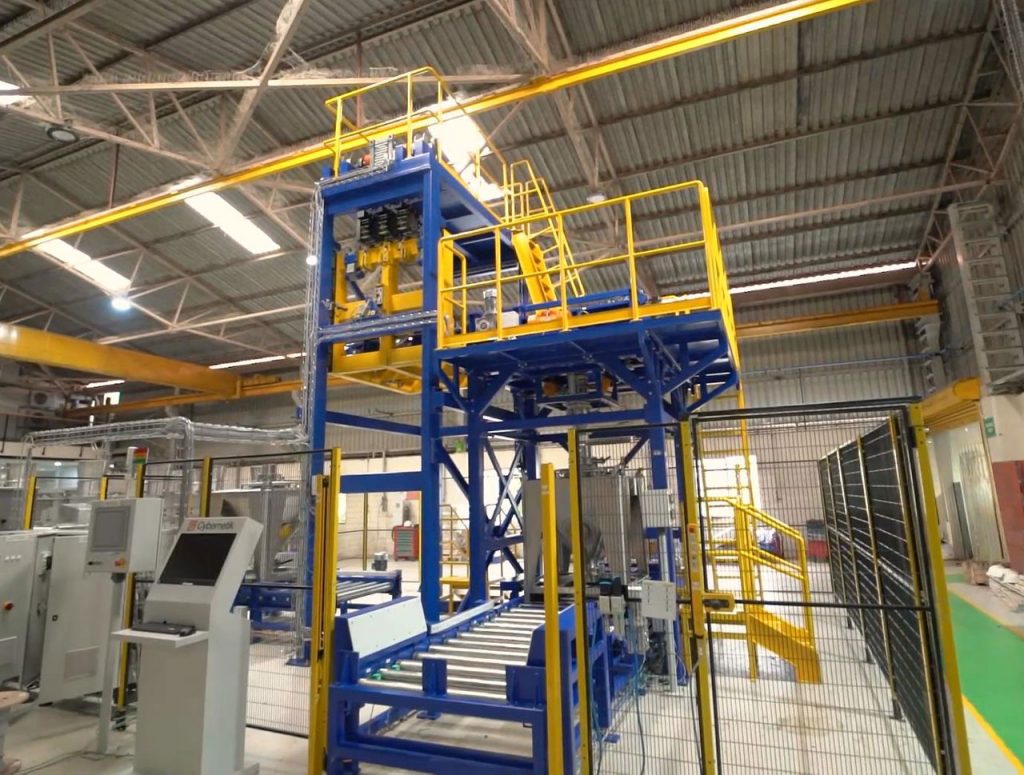
One of our manufacturers recently designed and implemented an automatic depalletizer and bag dump station for a customer in the chemical industry. The system involves a robot depalletizer that unstacks 50 lb. bags of chemical powders from a shipping pallet located to the left and right side of the robot. The bags are picked up 3 at a time and placed 1 at a time on a conveyor that transports them to an inclined belt conveyor that discharges them into automatic bag dump station. In this article, we’ll provide an overview of the system, explain how the robot depalletizer system works using a vision system, and outline the features and benefits of the system.
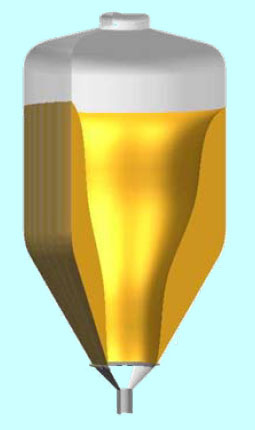
Ratholing occurs in hoppers, bins, and intermediate bulk containers when cohesive powders with interlocking particles build up or cake on the walls or sides of the container. This occurs more frequently when powders are discharged using a butterfly valve or slide valve and the powder flow takes place directly above the outlet. This creates a funnel flow effect where the cohesive powders flow directly above the outlet, but eventually build up on the sides reducing or stopping flow and powder discharge all together. This results in increased processing time including container disassembly and cleaning.
Bagging Corn Seed from Buckhorn Probox into Bag Filling Machine
This system precisely unloads free-flowing seeds, feed, corn, and more from a Buckhorn CenterFlow seed pro box into open mouth bags using an open mouth bag filler. The system can also be used to bag other free-flowing agricultural products like bird seed, wheat seed, deer corn, animal feed, fertilizer, pellets, and more.
View of Bagging Machine and High-Speed Bag Closer in an Automated Packaging System
Rice producers face several challenges when it comes to bagging and packaging their product. Manual bagging processes can be time-consuming, labor-intensive, and prone to errors. To overcome these challenges, a USA-based rice producer sought an automated packaging system that could increase production efficiency, reduce labor costs, and improve bagging accuracy. In this case study, we’ll examine how the company successfully implemented the system, resulting in significant time and cost savings.