

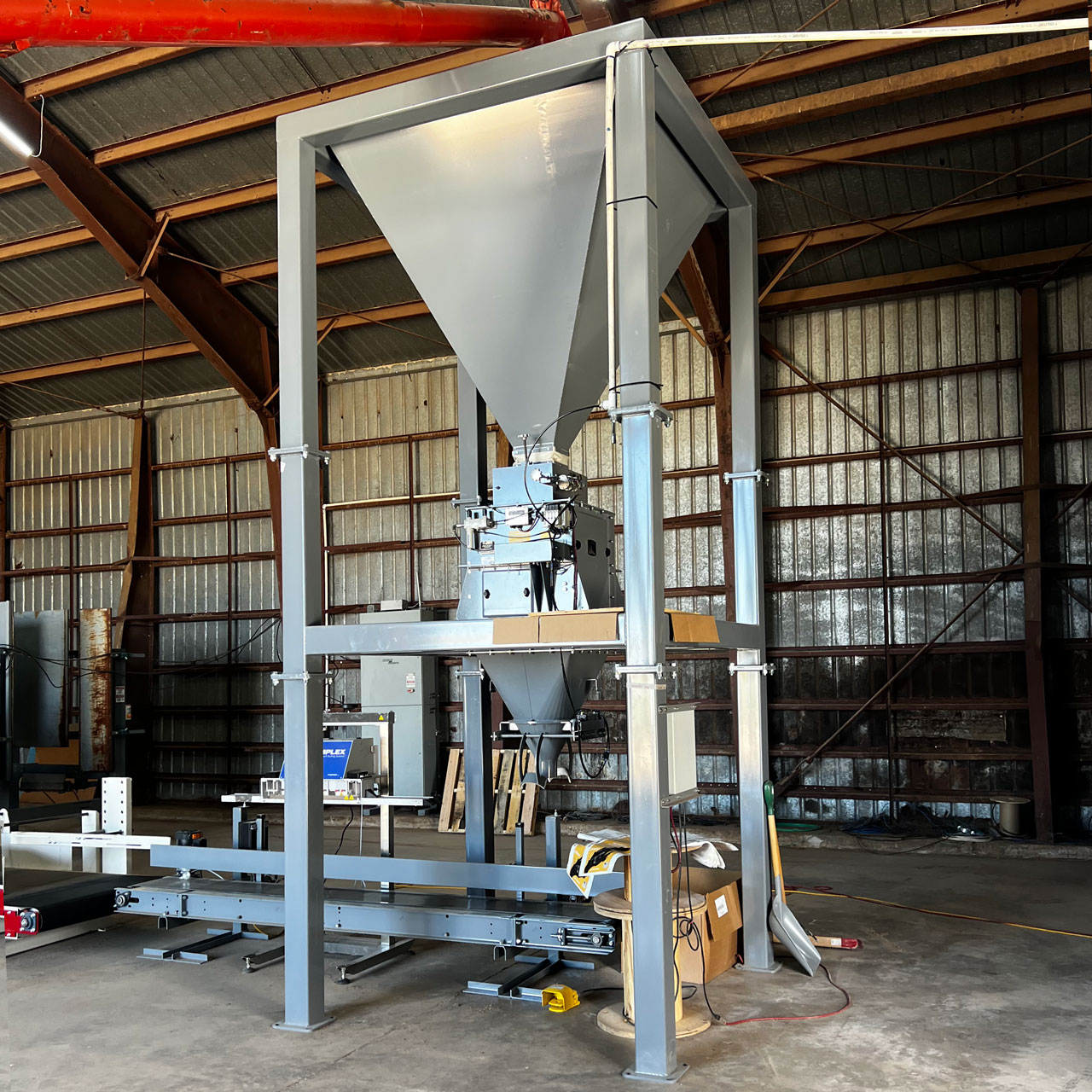
This bagging system fills and seals plastic open mouth style bags with a granular absorbent used to clean up floor spills. The system receives the blended product, weighs it into individual bags, heat seals each bag, and prepares the finished bags for manual or automatic palletizing.
Transferring the Granular Absorbent to the Bagging Scale
Before packaging, the ingredients are mixed together to produce the finished granular absorbent. The material is discharged from the mixer into an inclined auger conveyor.
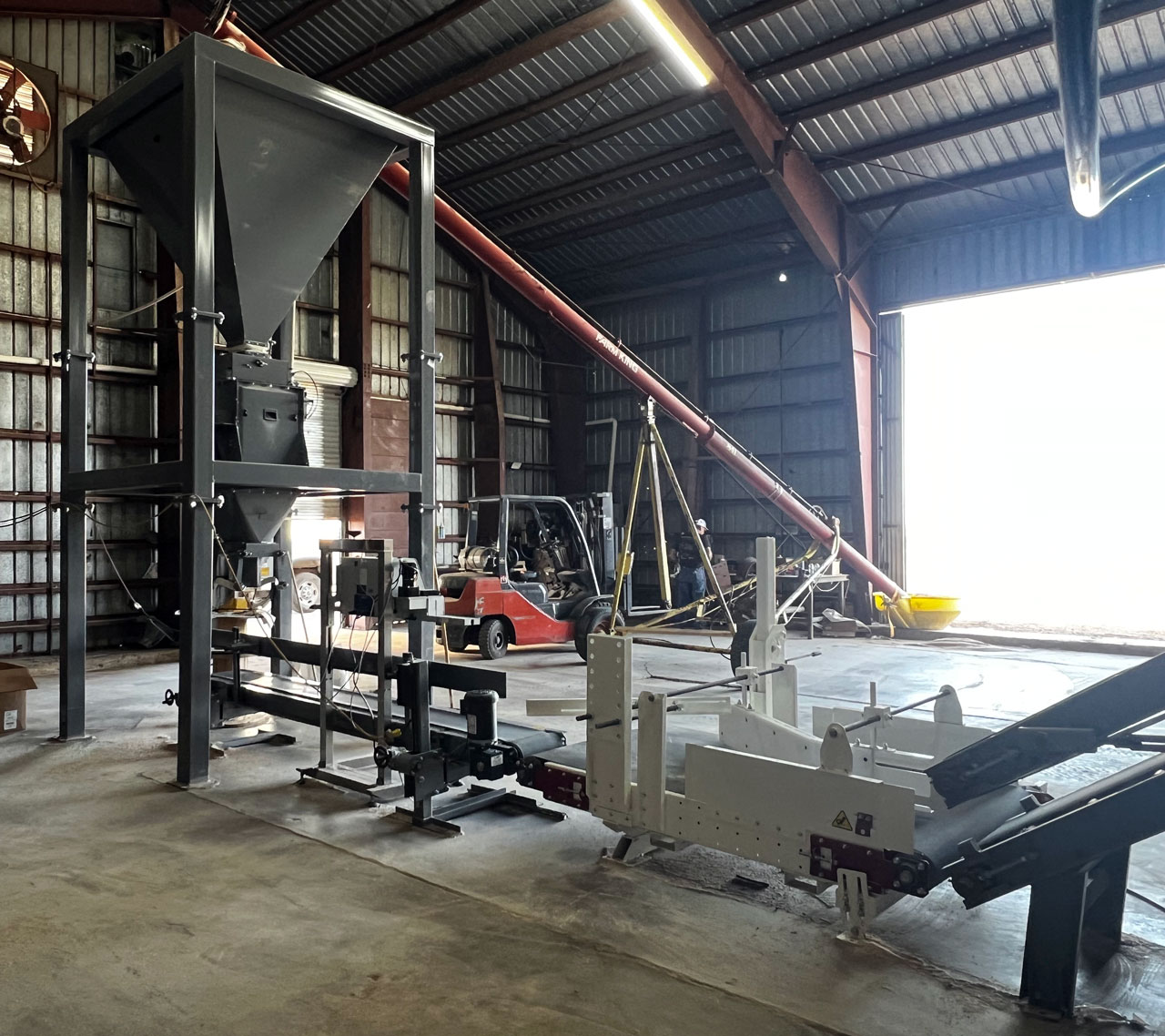
The auger transfers the blended product to a surge hopper positioned above an open mouth net weigh bagging scale. This hopper maintains a supply of material over the scale so bags can be filled without waiting for another mixing cycle to finish.
Filling Open-Mouth Plastic Bags
The net weigh bagging scale measures each batch of material before discharging it into the bag. An operator manually places an empty plastic bag beneath the filling spout and activates the filling cycle.
Using a net weigh scale separates the weighing and bag-filling steps. While one weighed batch is being discharged, the scale can begin preparing material for the next bag.
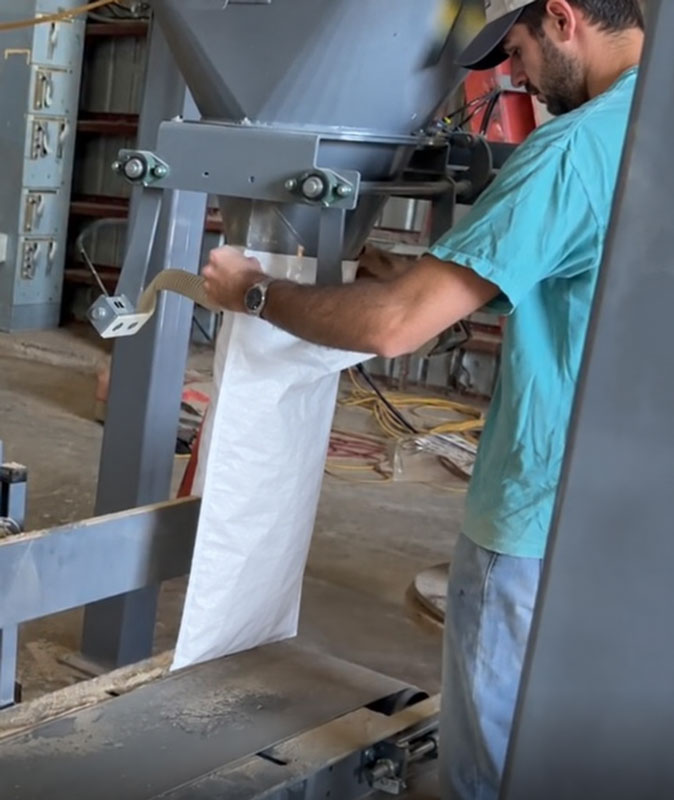
Once the amount of material in the weigh hopper reaches the set target weight, it is released into the open-mouth bag that is clamped to the spout. The filled bag is then automatically released from the spout and lowered onto a bag closing conveyor resting on an adjustable conveyor lift assembly.
Heat Sealing the Filled Bags
A continuous band heat sealer closes the plastic bags. As each filled bag moves along the closing conveyor, the open top is guided through the sealer to create a continuous heat seal.
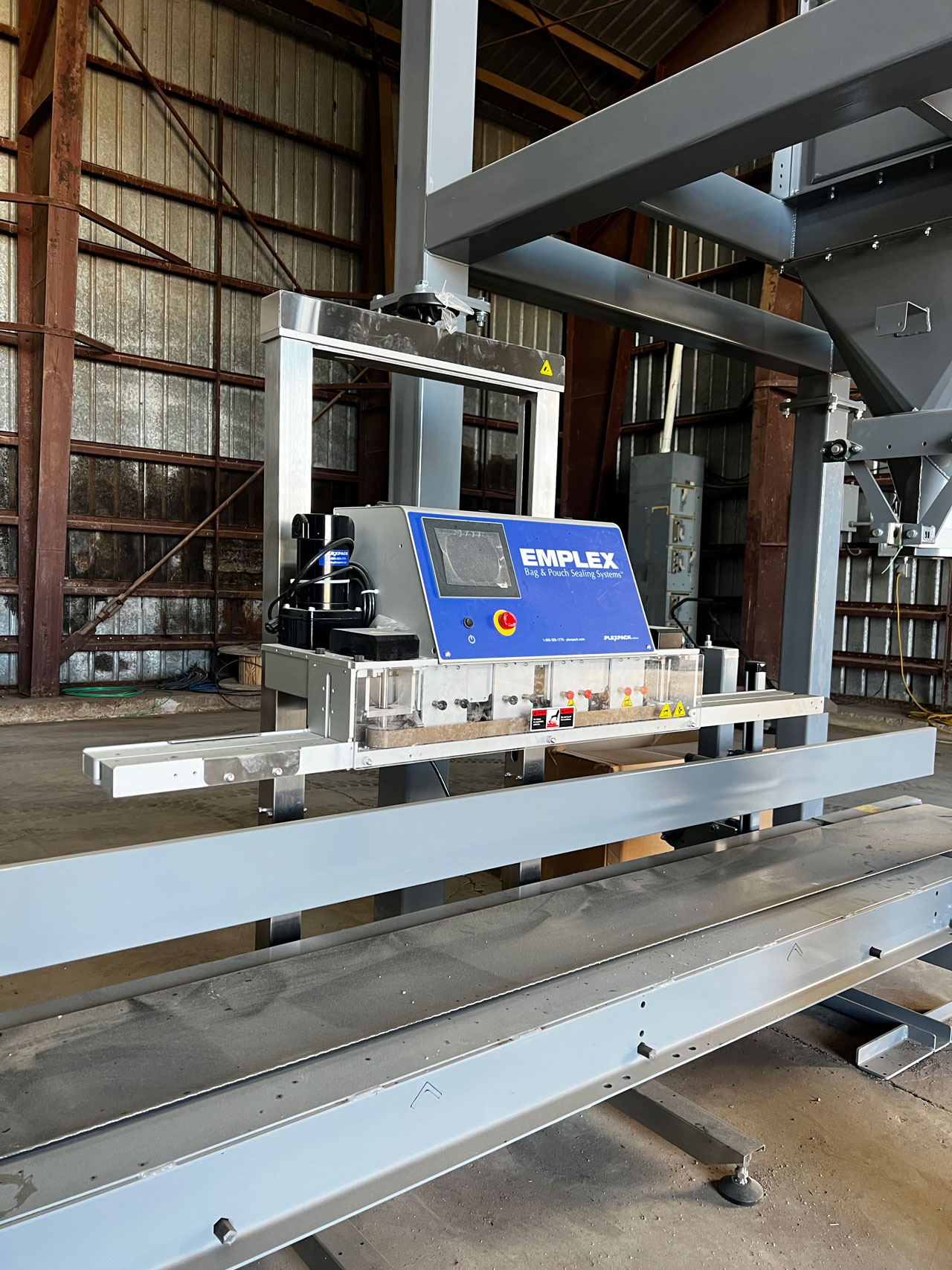
Granular absorbents can produce dust that collects around the inside surfaces of the bag opening. This contamination can interfere with the formation of a consistent heat seal. When a band sealer is used for dusty materials, we recommend including a bag-top cleaning or dedusting attachment before the sealing section.
The dedusting system helps remove material from the seal area before the bag enters the heat sealer. However, the material characteristics and proposed bags should still be tested together before the final equipment configuration is selected.
Turning and Flattening the Bags
After sealing, each bag travels to a bag tip and turn conveyor. This conveyor lowers the upright bag onto its face and turns it into the proper orientation for the next stage of the system.
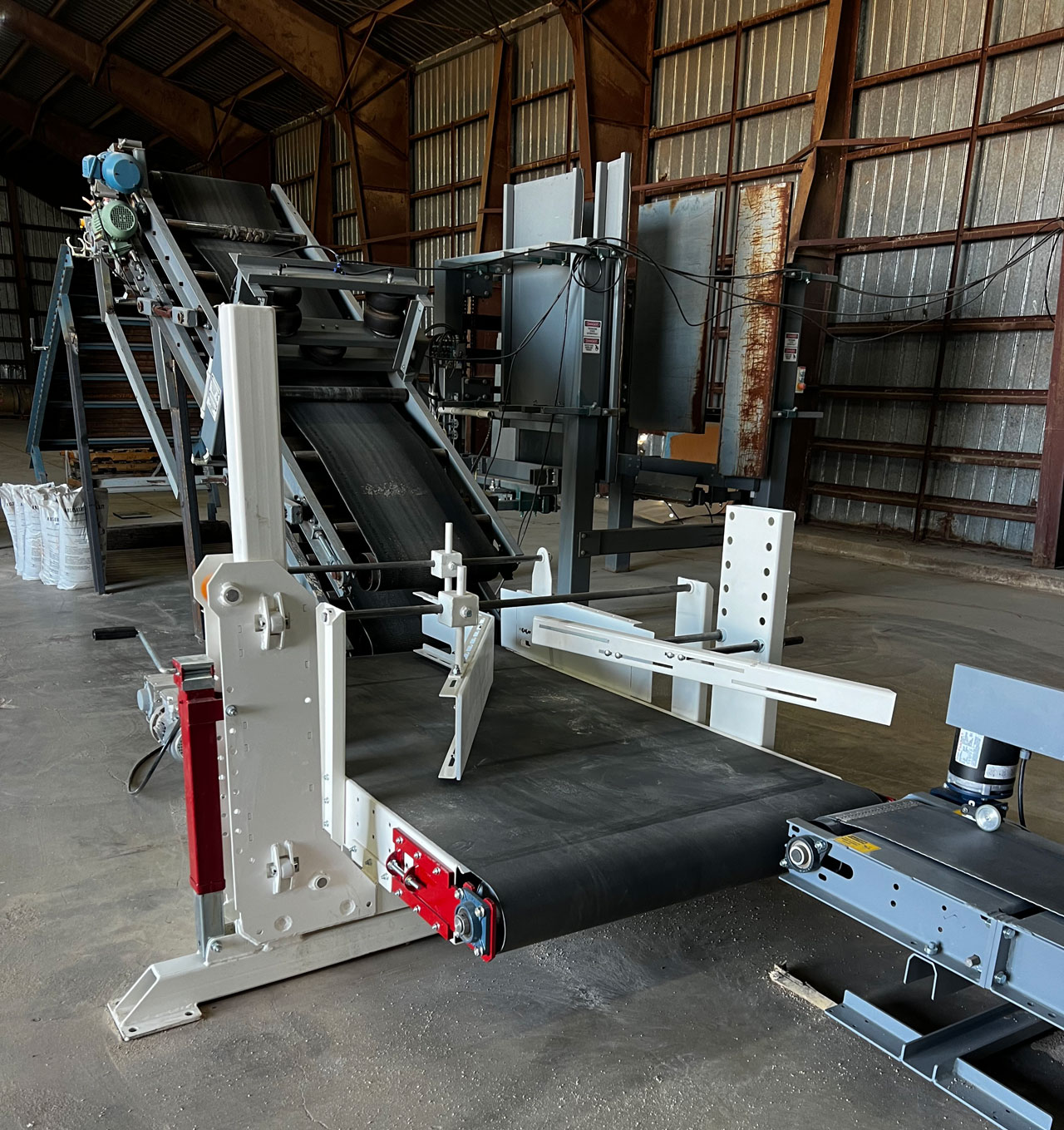
The bag travels bottom-first and face-down into an incline bag flattener conveyor. The opposing conveyor belts compress and shape the bag while distributing the granular material more evenly throughout the package.
Producing a flatter and more consistent bag makes manual handling easier and helps create more stable pallet loads. This conditioning step will also be important when the system is connected to an automatic palletizer.
Manual Palletizing During Phase One
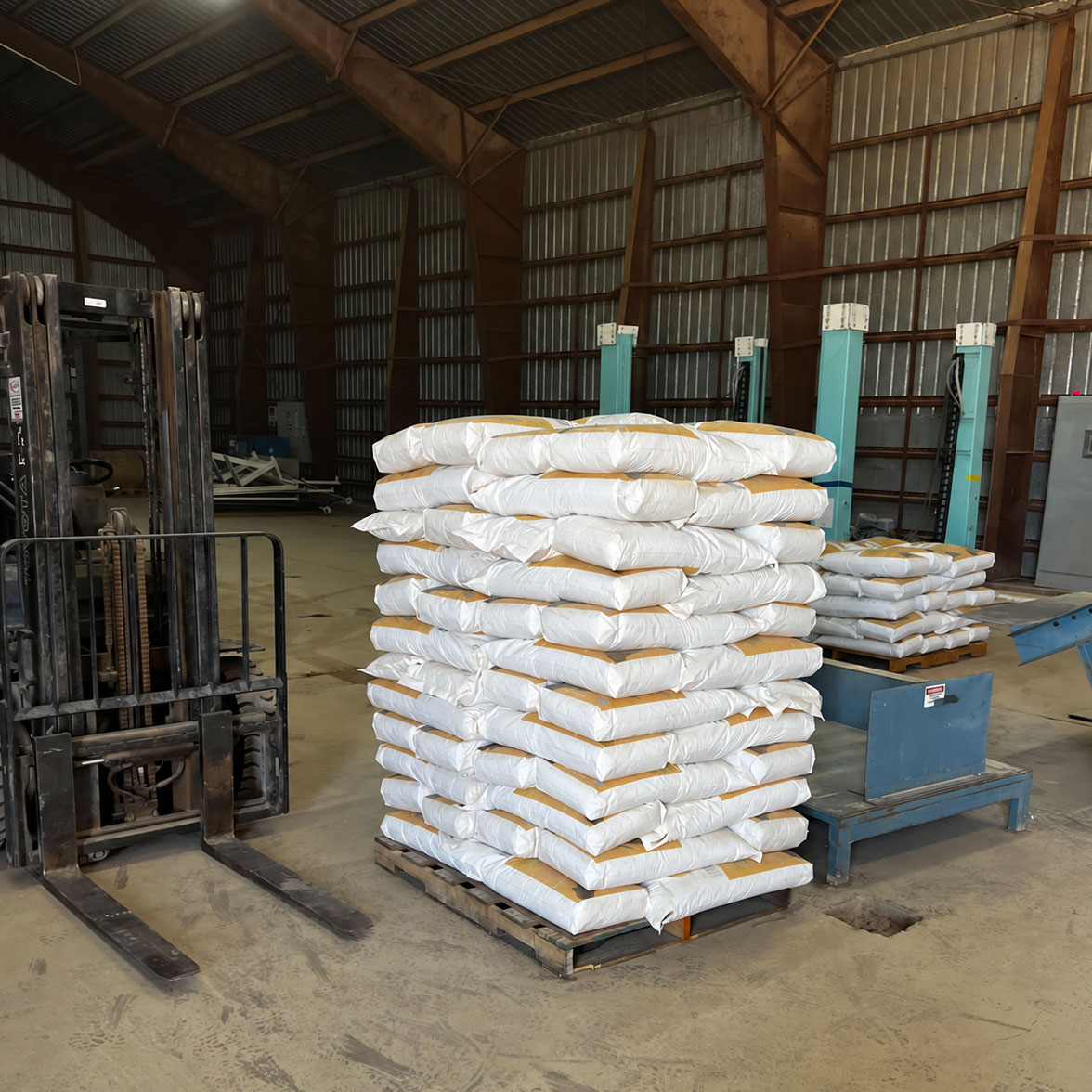
During the first phase of the project, the flattened bags discharge onto a gravity roller conveyor. An operator removes each finished bag from the conveyor and manually stacks it on a pallet.
This approach allowed the customer to install the filling, sealing, and bag-conditioning equipment first while leaving room for future automation.
Automatic Palletizing Planned for Phase Two
The second phase of the project will add a gantry-style bag palletizer. Once installed, the palletizer will automatically pick up the flattened bags and arrange them in programmed patterns on pallets.
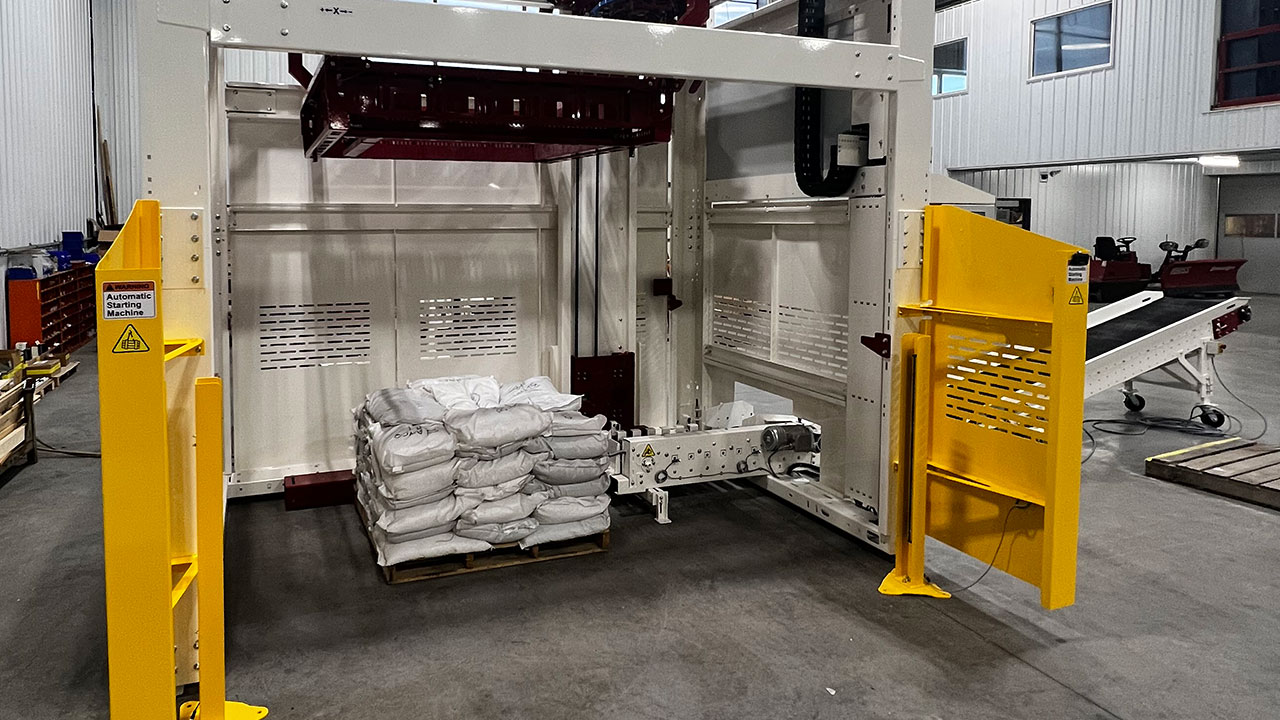
Because the bag tipper and flattener are already incorporated into the line, the bags will arrive at the future palletizer properly oriented and shaped for automatic handling.
This phased approach allows production to begin with manual palletizing while providing a clear path toward a more fully automated bagging system.
Selecting the Best Bag and Equipment for Granular Absorbents
For very dusty granular absorbents, our recommendation would be an auger-type valve bag filler. The filling spout extends into the valve sleeve of the bag, helping contain dust while the auger accurately feeds the material. The valve bag also provides a compact, pallet-friendly package.
If an open-mouth bag is required, a pinch-bottom open-mouth bag and pinch bag sealer may be another good option. This type of closing system is commonly considered for dusty products because the bag construction and closing process can provide a secure seal without relying on a clean thermoplastic seal area.
A continuous band sealer can still be used when compatible plastic open-mouth bags are preferred. For dusty products, however, bag-top dedusting and material testing become especially important.
The final bag and equipment recommendations depend on several factors, including:
- Material particle size, bulk density, and dust characteristics
- Target bag weight and production rate
- Preferred bag material and construction
- Required level of dust control
- Available floor space and ceiling height
- Manual or automatic palletizing requirements
Material samples are required for testing and to make final recommendations.
Ask a Question or Get a Price Quote
Call: (979) 217-1480