

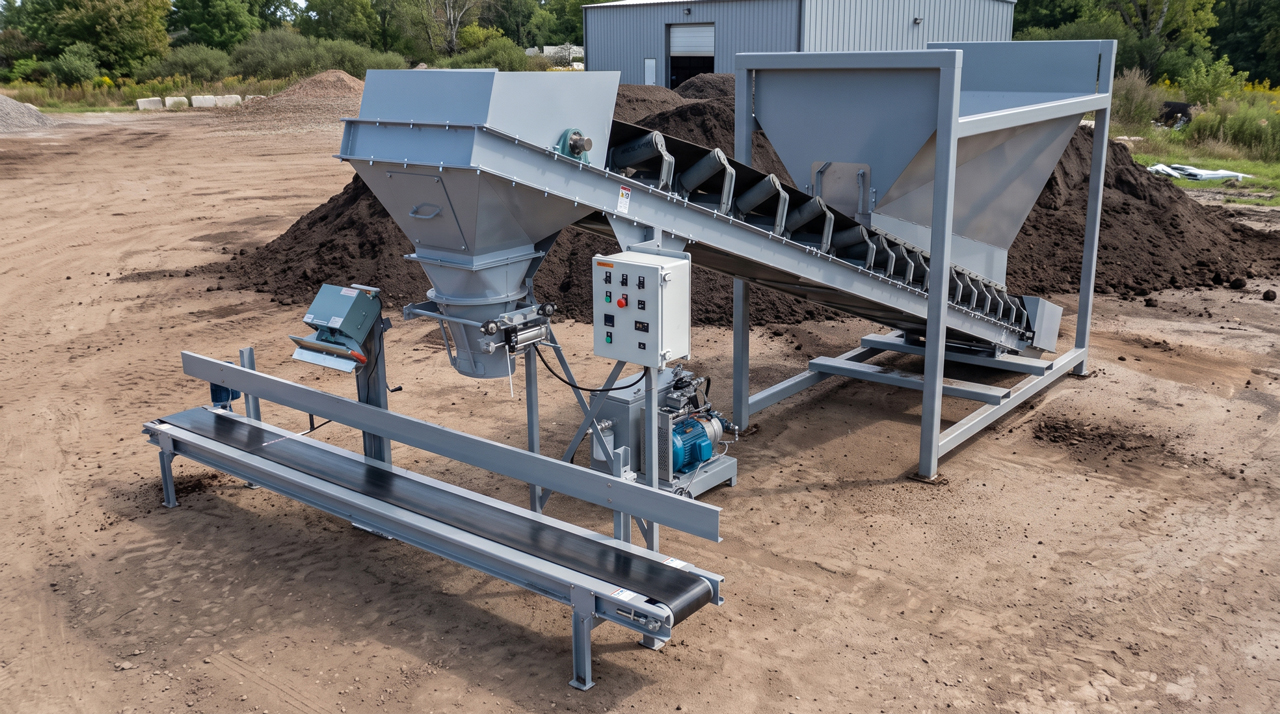
The SCRS Bagging System is designed for companies that need a straightforward way to fill and seal open-mouth bags with soil, compost, rock, sand, and similar loose landscaping products. The system combines a large receiving hopper, cleated incline conveyor, bag filling station, heat sealer, and filled-bag conveyor into a semi-automatic packaging line that can be operated by one person.
Typical applications can include bagging topsoil, screened compost, decorative rock, gravel, sand, soil blends, and other loose landscape products.
With the standard impulse heat sealer, typical production is approximately 3-4 bags per minute. When equipped with an optional continuous band sealer or hot air bag sealer, the system can typically operate at approximately 4-7 bags per minute, depending on the product, bag size, target weight, operator, and overall system configuration.
Ask a Question -or- Get a Price Quote
Call: (979) 217-1480

What Materials Can Be Bagged?
Although SCRS stands for Soil, Compost, Rock, and Sand, the system can handle other similar bulk landscaping materials when their characteristics are suitable for conveying and filling.
The material does not necessarily have to be completely dry. Products containing some moisture may be suitable as long as they remain sufficiently loose and free flowing through the hopper, conveyor, and bag filling equipment.
Particle size and consistency are also important. For example, screened compost or certain mulch-like landscape products may be possible if the material is relatively uniform.
However, products containing oversized pieces, large objects, long strands, sticks, fibrous material, or irregular pieces can bridge or rat-hole inside the equipment and interfere with consistent feeding.
For this reason, the system is no longer positioned specifically as a mulch bagging machine. Some screened and uniformly sized mulch products may be suitable, but highly fibrous or irregular mulch can be difficult to handle reliably.
*NOTE: A representative product sample should be tested before final equipment selection to confirm that the material flows properly and is compatible with the bagging process.
How the SCRS Bagging System Works
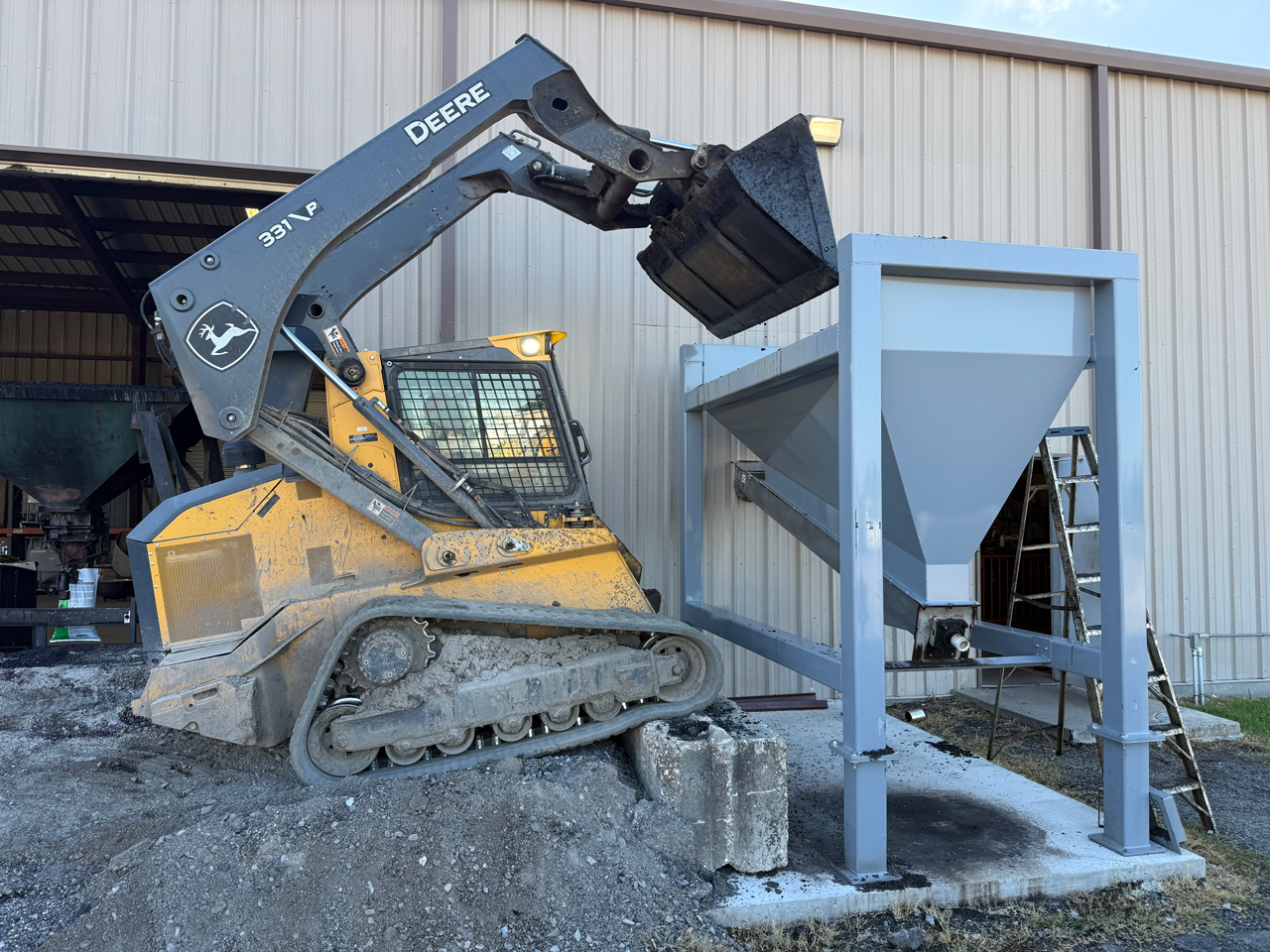
Bulk product is loaded into the system’s 2-cubic-yard surge hopper, typically using a front-end loader.
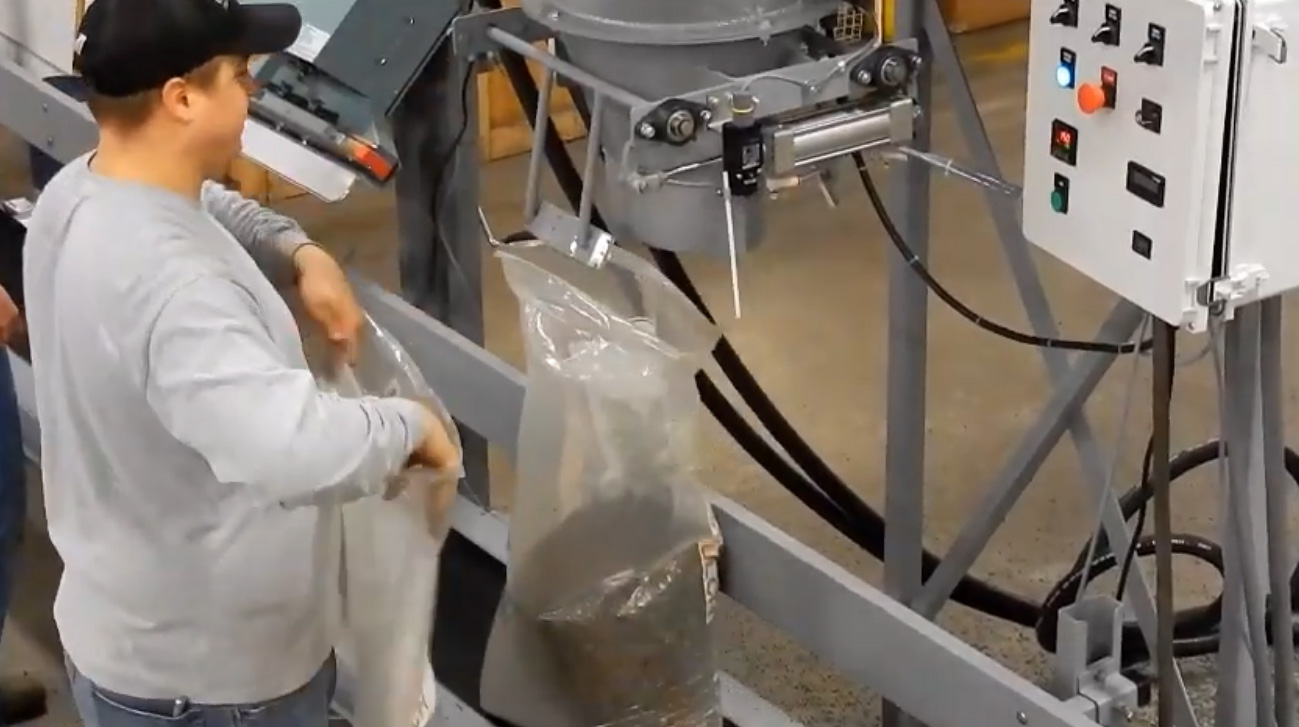
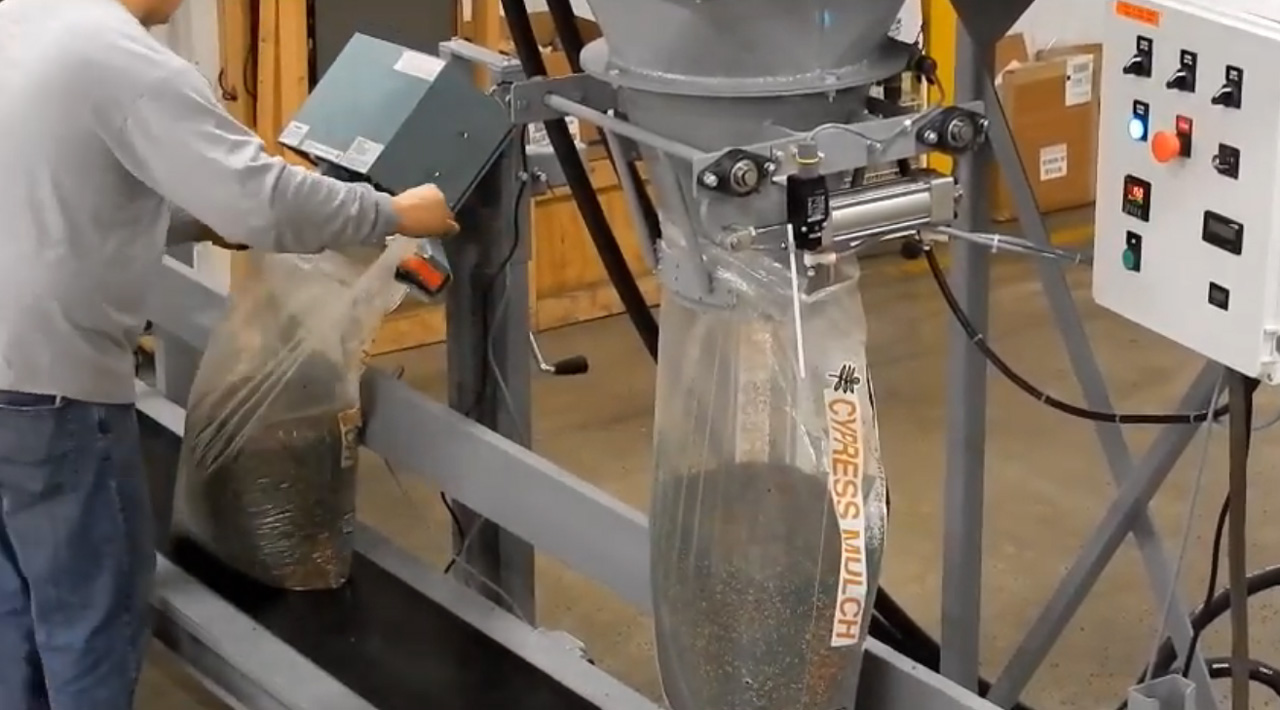
Material is then carried from the hopper on a 20-foot-long, 24-inch-wide troughed incline conveyor with a cleated belt. The conveyor delivers product to the open mouth bagging machine, where an operator positions an empty bag beneath the filling spout.
Bag filling can be controlled in two ways:
- By time and depth of material stream
- By digital weighing using load cells and a scale controller
After the bag reaches its target fill, it is transferred onto the bag closing conveyor.
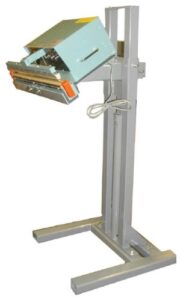 The standard system includes a programmable impulse heat sealer for closing compatible polyethylene or polypropylene bags. This configuration provides an economical approach for operations producing approximately 3-4 finished bags per minute.
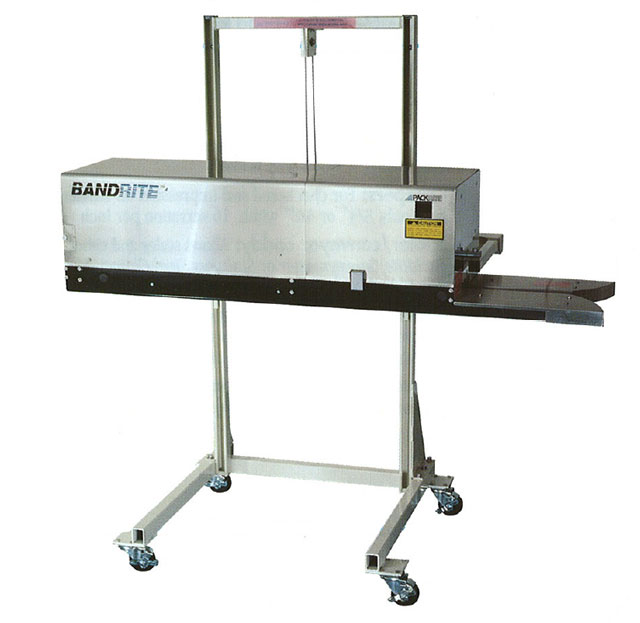
For higher production requirements, an optional continuous band heat sealer or hot air bag sealer can be used. These continuous sealing options can help increase overall system production into the range of approximately 4-7 bags per minute, depending on the material, bag, operator, and application.
The overall arrangement is designed so that 1-2 operators can place, fill, seal, and handle finished bags in a continuous process.
Standard SCRS Bagging System Features
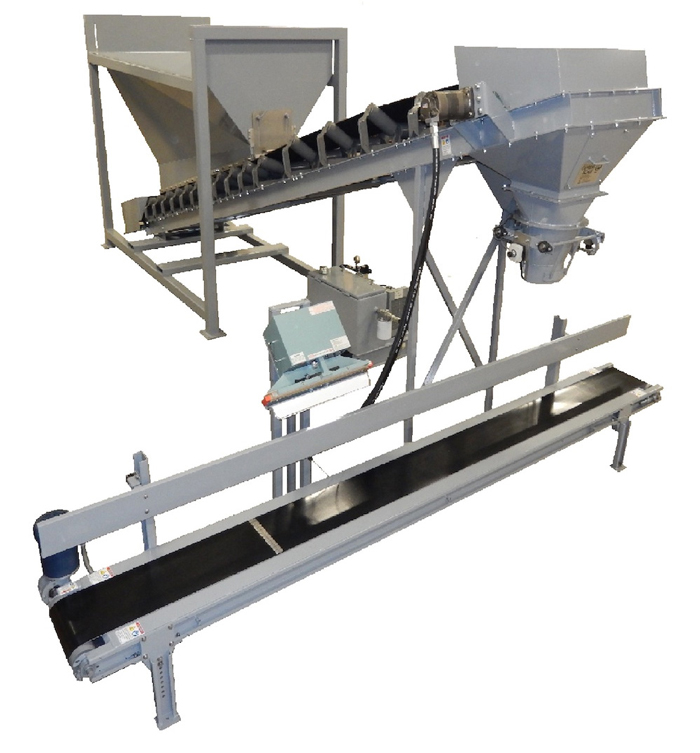
The standard system includes:
- 2-cubic-yard product surge hopper
- 20-foot-long x 24-inch-wide troughed incline conveyor
- Cleated conveyor belt for moving product to the bagging station
- Open mouth bagging machine
- Filling by time/depth of stream or digital load-cell weighing
- 880 ExpressPlus digital scale controller
- 8-foot-long x 12-inch-wide smooth-top bag closing conveyor
- Programmable impulse bag heat sealer
- 5 HP electric/hydraulic power unit
- Carbon steel construction with industrial powder-coated finish
- Single-operator design
- Typical production rate of approximately 3-4 bags per minute with the standard impulse sealer
- Optional continuous band or hot air sealing configurations can increase system production to approximately to 4-7 bags per minute, depending on the application
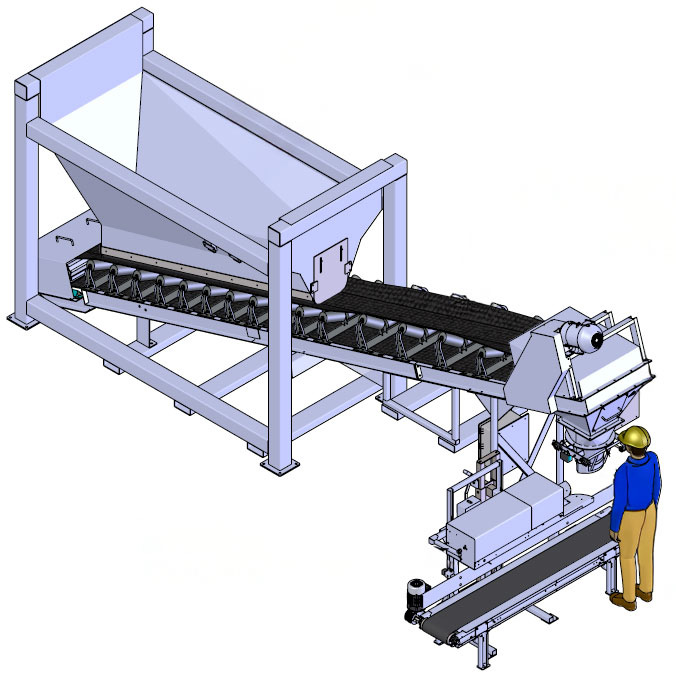
Note: Above drawing shows system with optional higher speed band heat sealer.
Frequently Asked Questions
What types of products can the SCRS Bagging System handle?
The system is designed primarily for loose, reasonably free-flowing materials such as soil, screened compost, sand, gravel, decorative rock, and similar landscape products.
Material characteristics matter. Products should be fairly uniform in size and able to move consistently through the hopper, conveyor, and filling section.
Can the system handle material with some moisture?
Yes, some moisture is acceptable as long as the product still flows reasonably well.
Very wet, sticky, clumpy, or compacted material may not feed consistently and should be tested before the system is selected.
Can the SCRS system bag topsoil?
Yes. Screened topsoil and soil blends can be good applications when the material is loose enough to flow consistently.
A front-end loader can feed bulk material into the receiving hopper, and the system then conveys it to the bag filling station.
Can it bag compost?
Yes, provided the compost is screened and relatively uniform.
Large sticks, oversized organic material, fibrous pieces, or wet clumps can interfere with feeding, so a representative product sample should be evaluated before finalizing the equipment.
Can the system bag sand?
Yes. Free-flowing landscaping sands and similar granular materials can be handled by the SCRS system.
Bags can be filled by time and material flow or by using digital load-cell weighing, depending on the application.
Can it handle rock or gravel?
Yes, for appropriately sized rock, gravel, decorative stone, and similar products.
Oversized pieces should be removed because material that is too large for the conveyor or filling components can cause feeding problems.
What about mulch?
Some mulch products may work, but mulch requires more careful evaluation.
The best candidates are screened products with shorter, more uniformly sized pieces. Long strands, sticks, oversized chunks, tangled material, or highly fibrous mulch can bridge or rat-hole and may not feed reliably.
For that reason, the system is primarily positioned for soil, compost, rock, sand, and similar loose materials rather than mulch in general.
How fast can the SCRS Bagging System run?
With the standard impulse heat sealer, a typical production rate is approximately 3-4 bags per minute.
With an optional continuous band sealer or hot air bag sealer, production can typically increase to approximately 4-7 bags per minute.
Actual rates depend on the material, bag size, target weight, operator, and overall system configuration.
What bag sealing options are available?
The standard system uses a programmable impulse heat sealer, which is the lower-cost option.
For higher production rates, the system can be upgraded with a continuous band heat sealer or hot air bag sealer. The best choice depends on the bag material and desired production rate.
Can equipment be added to make pallet loading easier?
Yes. Optional palletizing equipment can include a bag incline conveyor, gravity roller accumulation table, and EZ Pallet Loader.
These components can raise filled bags closer to pallet height and make manual stacking easier for the operator.
Does the material need to be tested first?
Yes! Because soil, compost, rock, sand, and other landscaping products can vary significantly, a representative sample should be tested before final equipment selection.
Testing helps confirm that the material is sufficiently free flowing, appropriately sized, and compatible with the filling system.
Can this type of system bag materials other than soil, compost, rock, and sand?
Yes. Different configurations of this same basic bagging system can be adapted for other bulk materials.
For example, similar systems can be configured for asphalt cold patch and other dense, difficult-to-flow paving materials. Those applications may use different feeding equipment, such as an auger conveyor, along with hot air sealing and other downstream equipment.
The system can also be configured for rock salt, ice melt, and similar deicing products. Because salt is highly corrosive, these applications typically require stainless steel upgrades or other corrosion-resistant construction in appropriate product-contact and exposed areas.
As with any application, the material should be evaluated before final equipment selection so the feeding method, construction materials, bagging equipment, and bag sealer can be matched to the product.
Ask a Question -or- Get a Price Quote
For producers looking for a soil bagging machine, compost bagging machine, sand bagging system, rock bagging equipment, or packaging system for loose landscape products, the SCRS provides a straightforward approach for filling, sealing, and preparing bags for palletizing.
Call: (979) 217-1480