

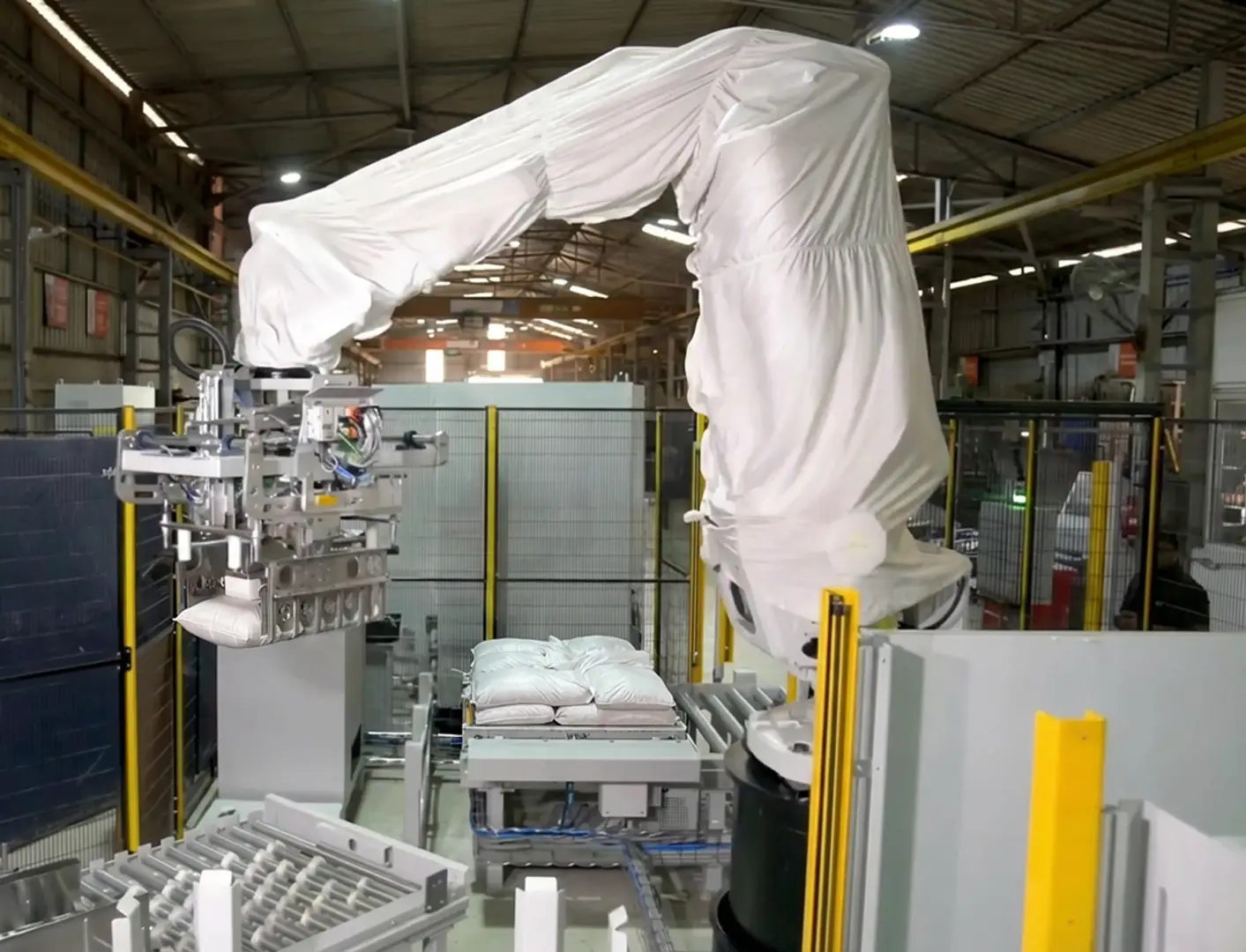
This palletizing robot was designed for a small business that needed automated palletizing in a limited amount of floor space. In this application, the system was used to stack bags onto pallets, but the same general type of robotic palletizer can also be used for boxes, cases, and other packaged products.
The compact system includes a palletizing robot and an automatic pallet dispenser that places a pallet into position and applies a cardboard slip sheet on top of the pallet before bag stacking begins. For operations looking for a robotic palletizer for small spaces, small areas, or even a small business/startup operation, this type of layout can be an efficient way to automate end-of-line palletizing without the larger footprint of a traditional high-speed palletizing system.
Watch a Video
Watch the video to see this palletizing robot in action. The system automatically positions a pallet, places a cardboard slip sheet on top, and then stacks bags in a programmed pattern until the pallet load is complete.

Ask a Question or Get a Price Quote!
Speak with one of our sales engineers today.
Call: (979) 217-1480

Process Description
The process begins when filled bags discharge from the upstream open mouth bagging machine and move toward the palletizing area. From there, the bags are presented to the palletizer for pickup and placement.
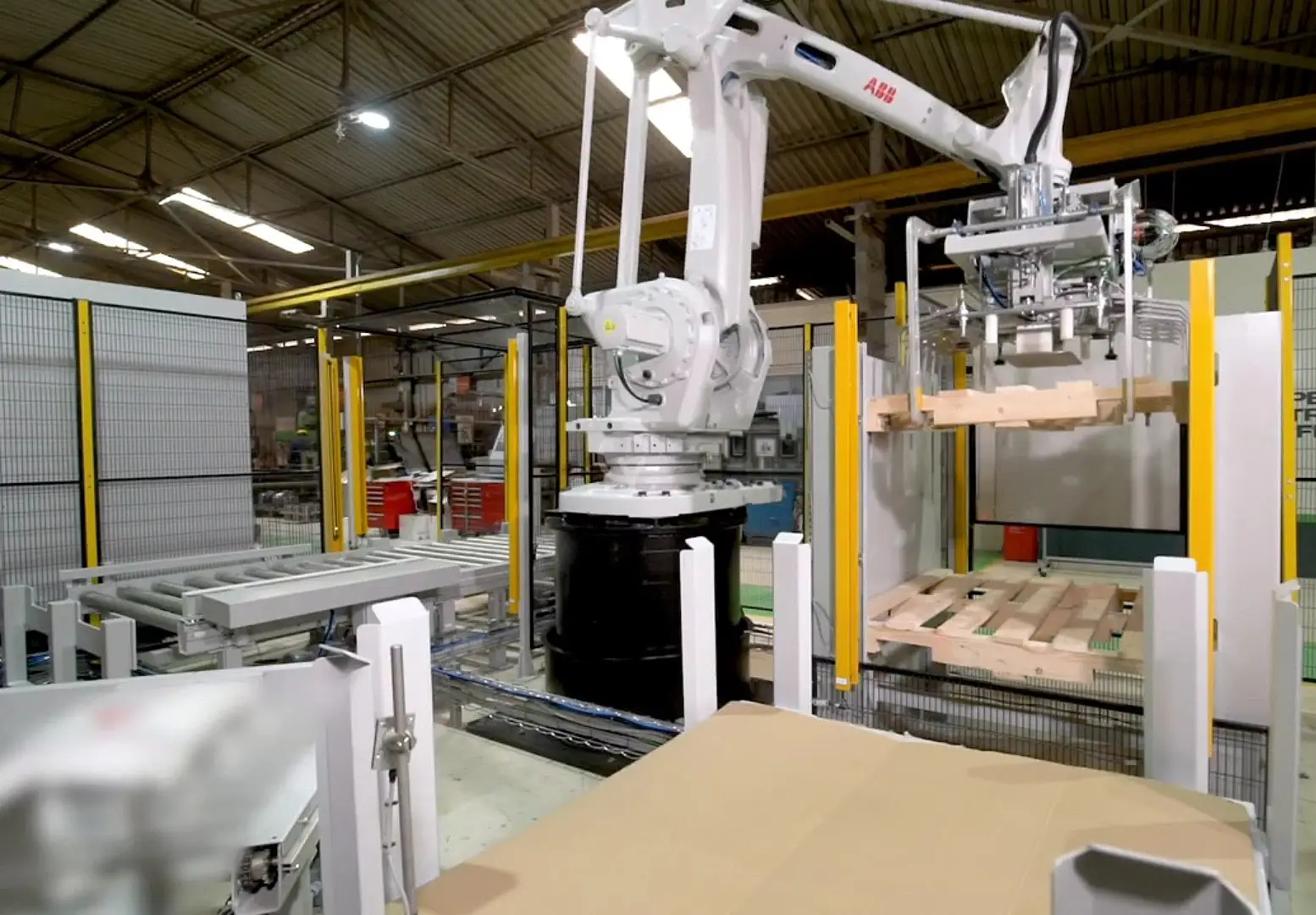
Robotic palletizer retrieving a pallet
At the same time, the automatic pallet dispenser feeds an empty pallet into the stacking position. Before the first layer of bags is placed, the system applies a cardboard slip sheet on top of the pallet. This creates the base for the load and helps support stable stacking as the pallet is built.
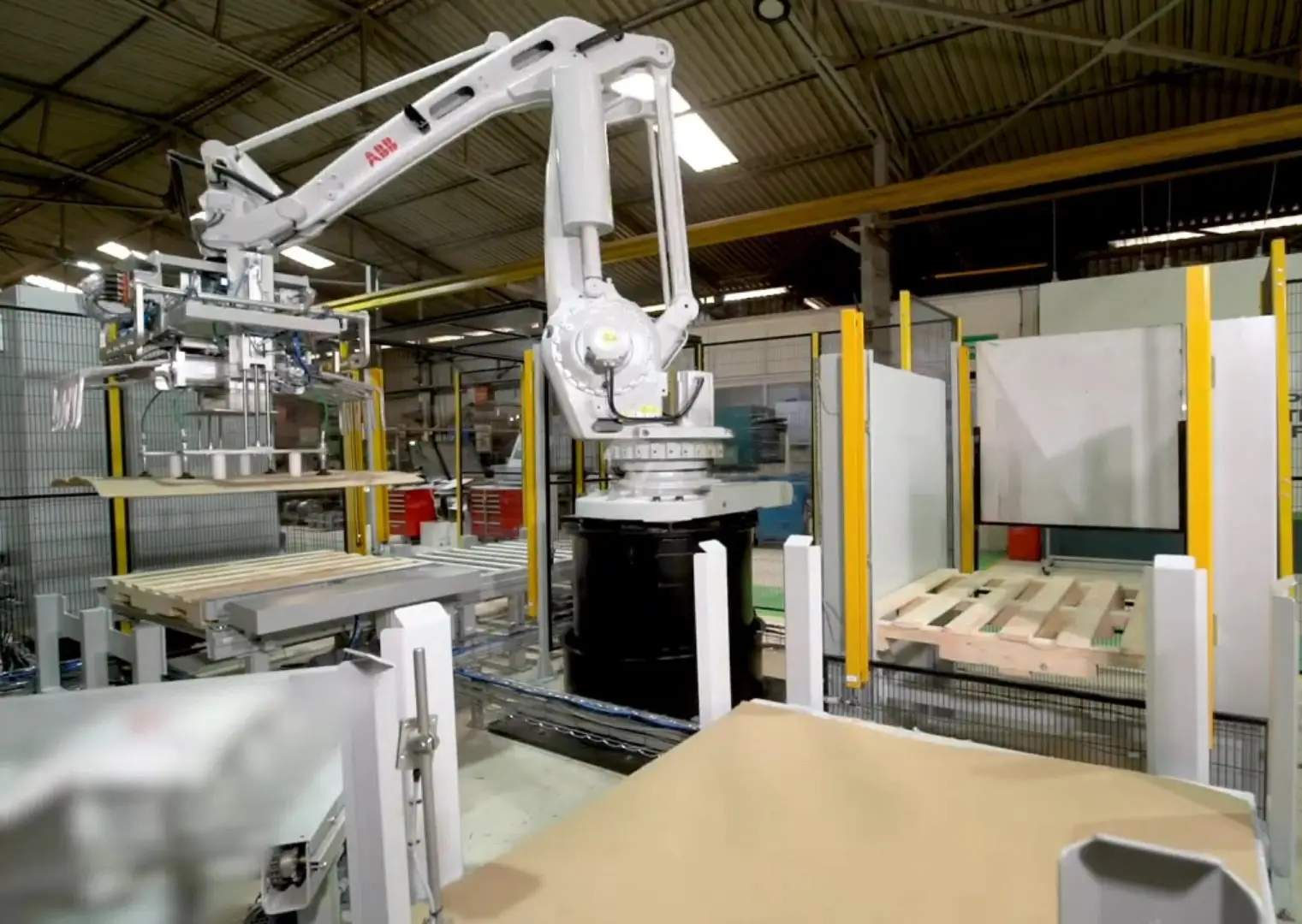
Robotic palletizer adding a cardboard slip sheet on top of pallet
Once the pallet and slip sheet are in place, the robotic palletizer begins arranging bags in a preset pattern. The robot places the bags layer by layer, forming a neat and stable pallet load. Depending on the bag size and stack pattern, the total number of bags per pallet can vary. In this application, some pallets held approximately 20 bags while others held up to 44 bags.
The palletizing robot continues repeating the stacking sequence until the pallet is complete. Once the finished load is ready, it can be removed and transferred to the next stage of handling, stretch wrapping, storage, or shipment.
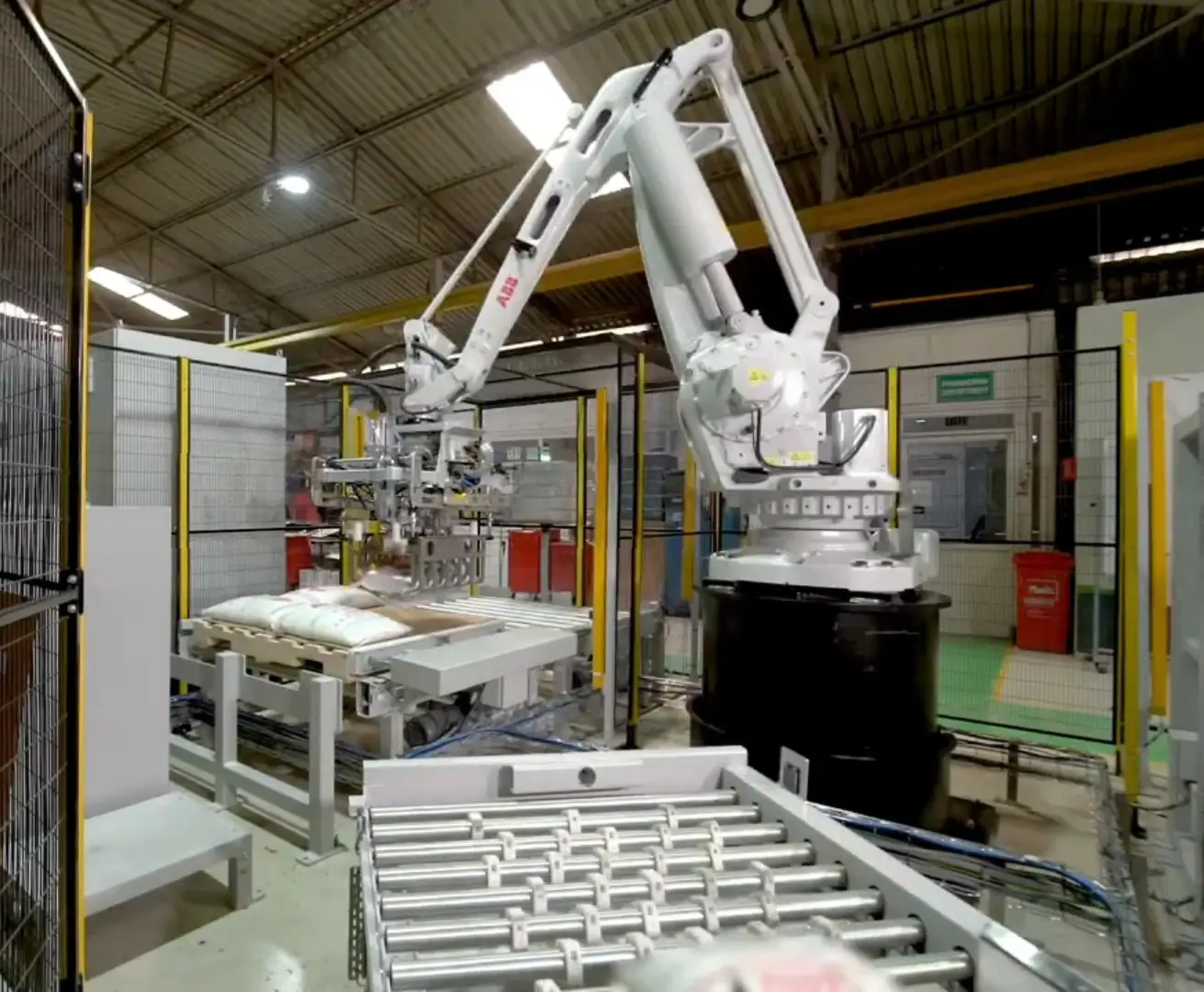
Robot stacking bags in a pattern
20 ft x 20 ft Footprint
One of the key benefits of this system is that it delivers automated palletizing performance in a compact layout. A typical installation for this type of small footprint palletizer would require about an 18 ft x 18 ft area for the equipment itself, with a safety-fenced footprint closer to 20 ft x 20 ft to provide appropriate clearance around the cell. That additional margin helps improve safety by reducing the ability of personnel to reach into the operating area while the system is running.
What Can Be Palletized with This Type of System?
Although this project involved palletizing bags, this type of robotic palletizer for small spaces can also be used for a variety of other products. Depending on the gripper design, product dimensions, and throughput requirements, similar systems can often palletize:
- Bags
- Boxes
- Cases
- Bundles
- Other packaged products
Looking for a small footprint palletizing robot for bags, boxes, or cases?
We can help you evaluate robotic integration for small spaces, including systems with automatic pallet dispensing, slip sheet placement, and compact safety-fenced layouts.
Contact us to discuss your product type, pallet pattern, available floor space, and production goals.
Call: (979) 217-1480