

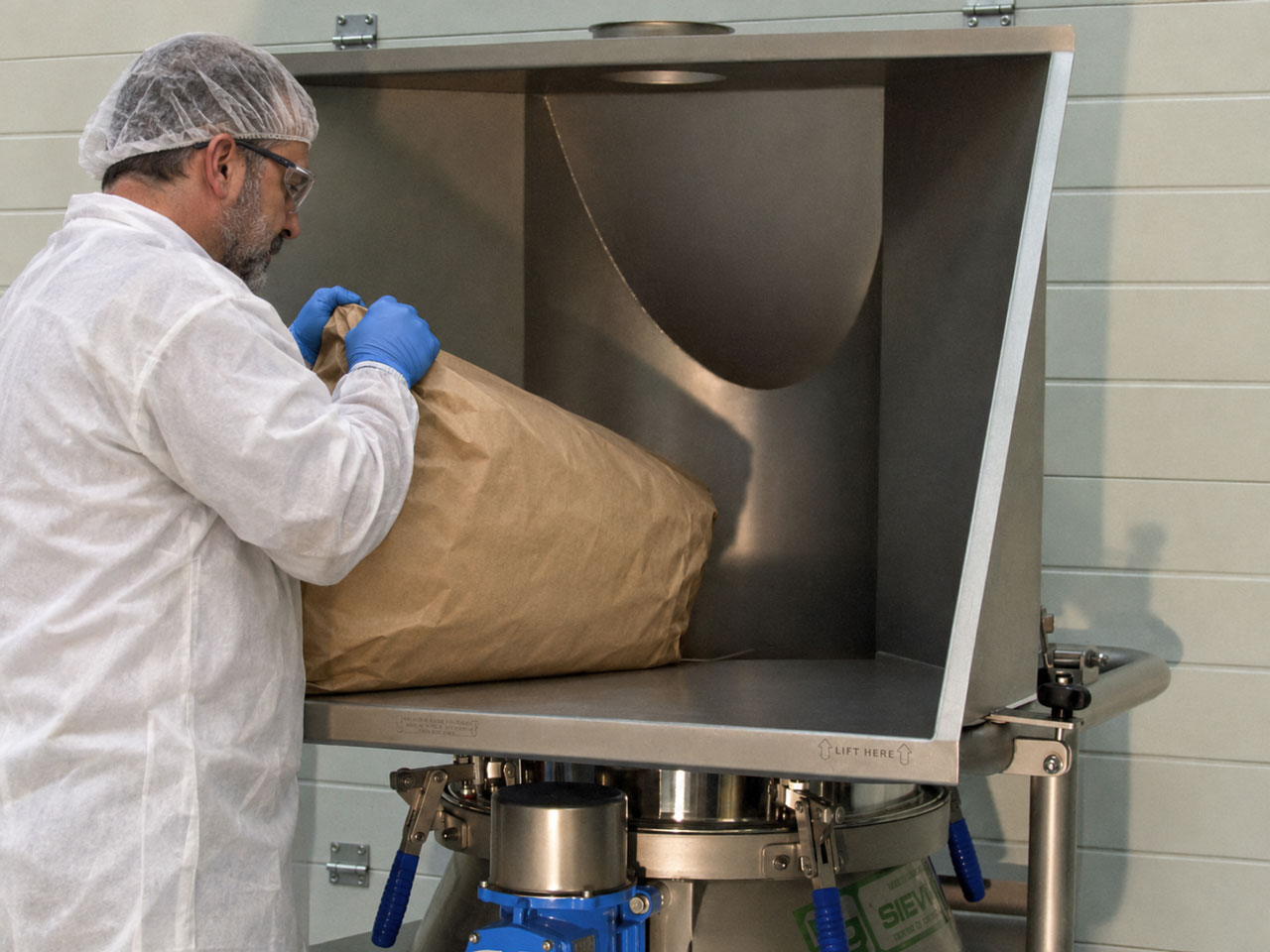
A bag dump station with a check screen gives operators a place to empty bags of spices and seasoning ingredients while screening the material before it enters a mixer, blender, IBC bin, or bulk bag. Combining bag dumping and check sifting at one station can help remove unwanted oversize material, control dust, and simplify ingredient handling.
For seasoning manufacturers working with bagged ingredients such as ground pepper, garlic, and onion, this arrangement adds a screening step between opening the bags and introducing their contents into production.
Screening Bagged Ingredients Before Blending
An example application would be for a seasoning manufacturer or toll blending company that receives pre-milled and sized ingredients in 50 lb bags. These ingredients are ready for blending, but the process calls for a check screen before they enter the blender.
Process Description:
1. Open and empty the bags. An operator places a bag on the bag rest, opens it, and tips the contents into the bag dump station.
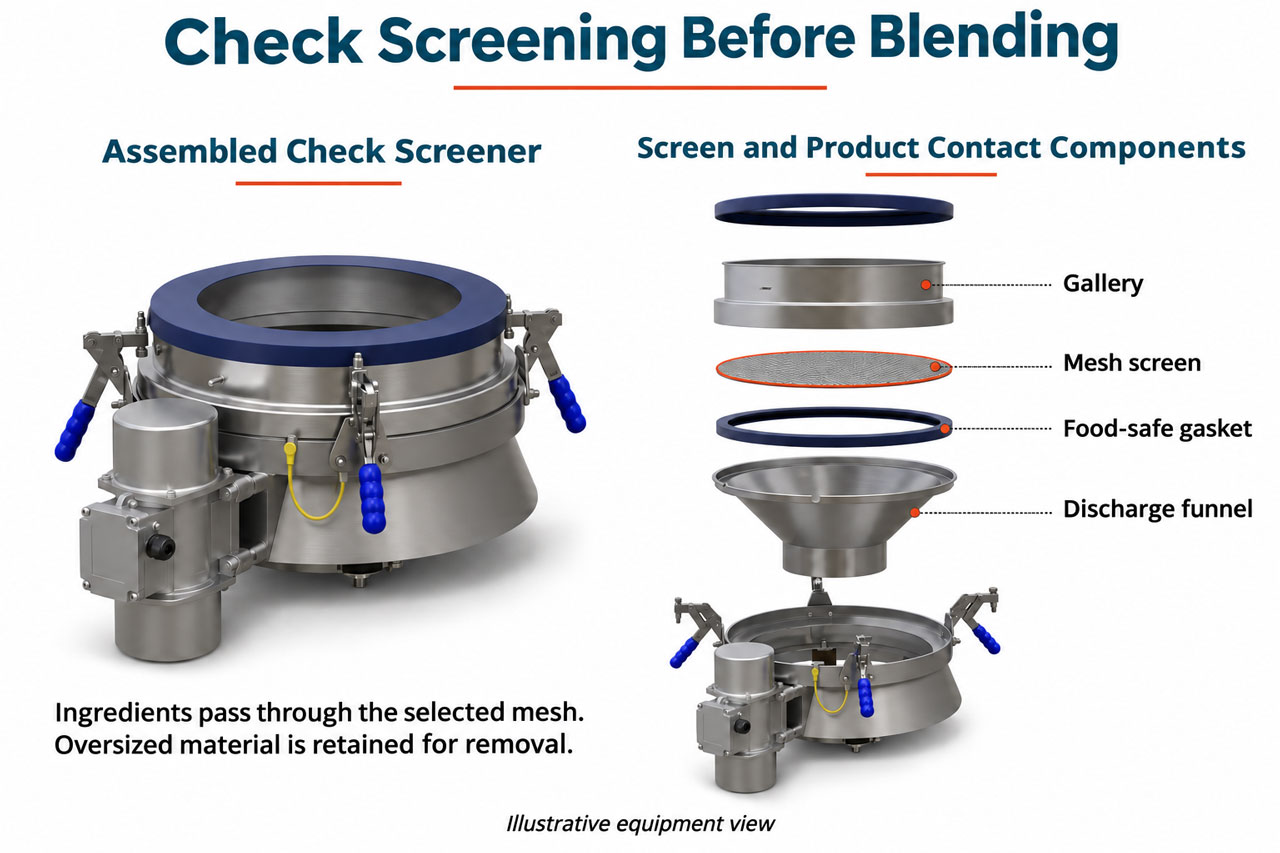
2. Check screen the ingredients. Material passes through a vibratory screen. Oversized material and foreign objects that cannot pass through the selected screen opening are retained.
3. Weigh or proportion the screened material. A separate weighing or batching arrangement establishes the required ingredient quantities before blending.
4. Blend and package. The ingredients are mixed according to the recipe, and the finished seasoning moves to packaging. Additional screening after blending can be included when required by the product or customer specification.
In this application, the screen checks incoming ingredients. It does not replace milling or ingredient weighing equipment.
Selecting a Screen That Preserves the Seasoning Recipe
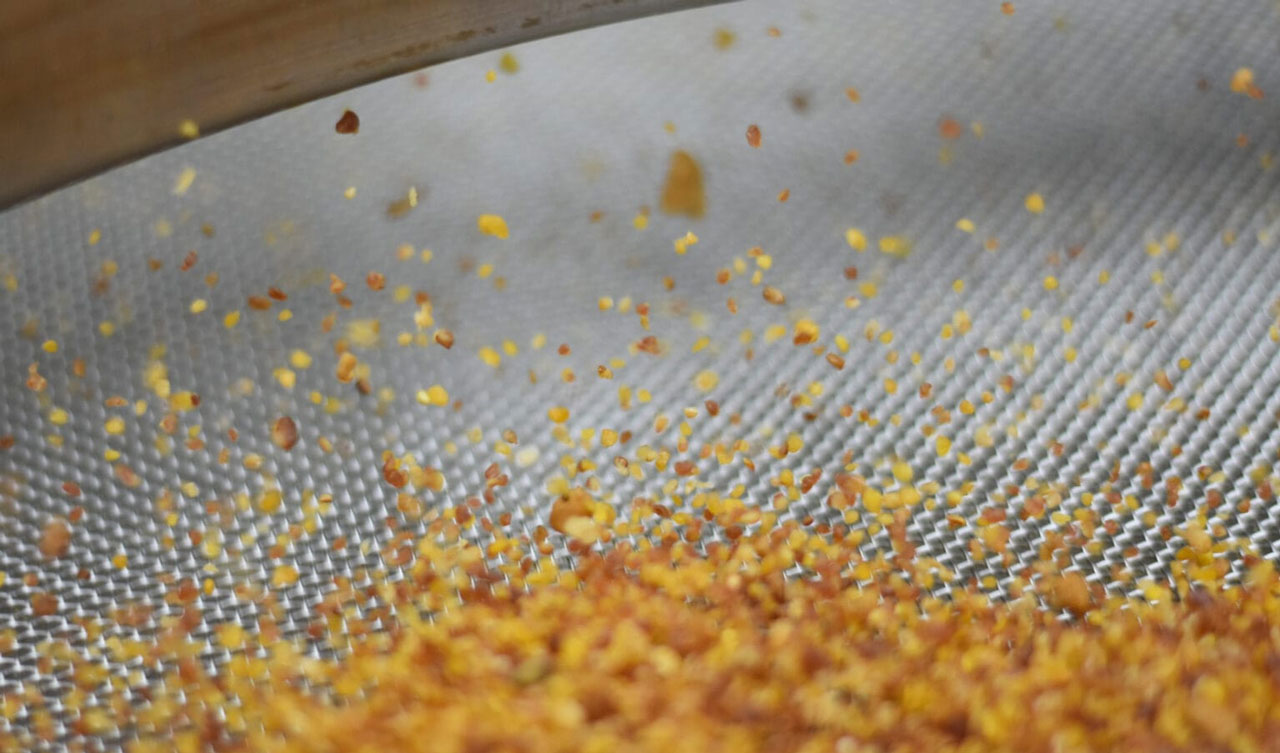
The screen opening must accommodate the intended ingredient sizes. A seasoning blend may contain fine powders alongside desirable coarse pepper, garlic, or onion particles. Selecting an opening that is too small could remove useful ingredients and alter the finished blend.
Screen selection should consider the largest acceptable ingredient particles, the material that needs to be rejected, and the required production rate. Different recipes may require different screens.
Check screening separates material by size. It does not remove every type of contamination. An optional magnetic separator provides an additional step for capturing ferrous contamination.
Ask a Question -or- Get a Price Quote
Call: (979) 217-1480

Bag Dump Screening Equipment and Options
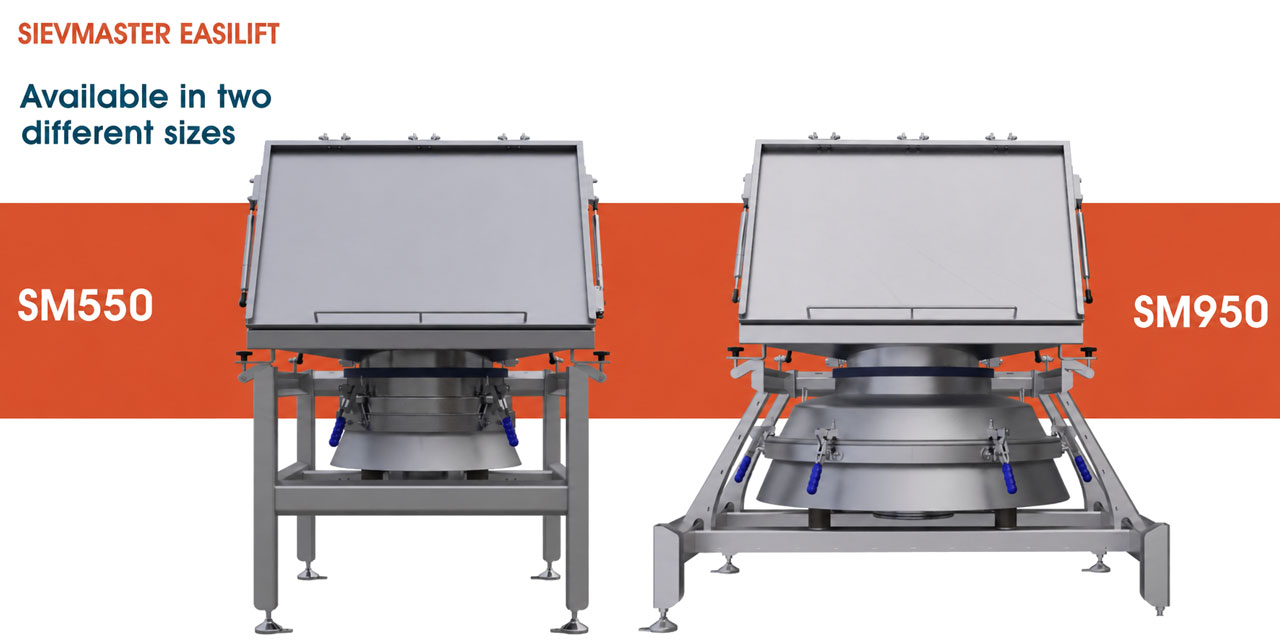
Farleygreene SM550 and SM950 Slimline check screeners can be combined with the Easilift bag tipping arrangement to create a station for manually loaded ingredients. The Easilift range is designed to accept up to 25 kg, or approximately 55 lb, of product at a time, accommodating a typical 50 lb ingredient bag. This loading quantity is separate from the system’s hourly screening capacity.
Depending on the application, the system can include:
- A support frame and bag tipping hopper with an inclined bag rest.
- A vibratory check screener with removable screens.
- An optional magnetic separator.
- A connection to dust extraction or an integral dust collection system.
- An outlet arrangement matched to the receiving container or downstream equipment.
- A mobile configuration for use in different production or cleaning areas.
The required capacity, screen opening, product characteristics, and discharge height help determine the appropriate configuration.
Easier Cleaning and Recipe Changeovers
Contract seasoning manufacturers may handle many recipes in a single production area. Access for cleaning and inspection is especially valuable when changing between products with different colors, flavors, or ingredients.
The Easilift hood provides access to the screening area, and tool-free, quick-change screens allow operators to remove a used screen and install a clean replacement. The removed screen can then be cleaned separately, helping reduce time spent waiting for screen cleaning during a changeover.
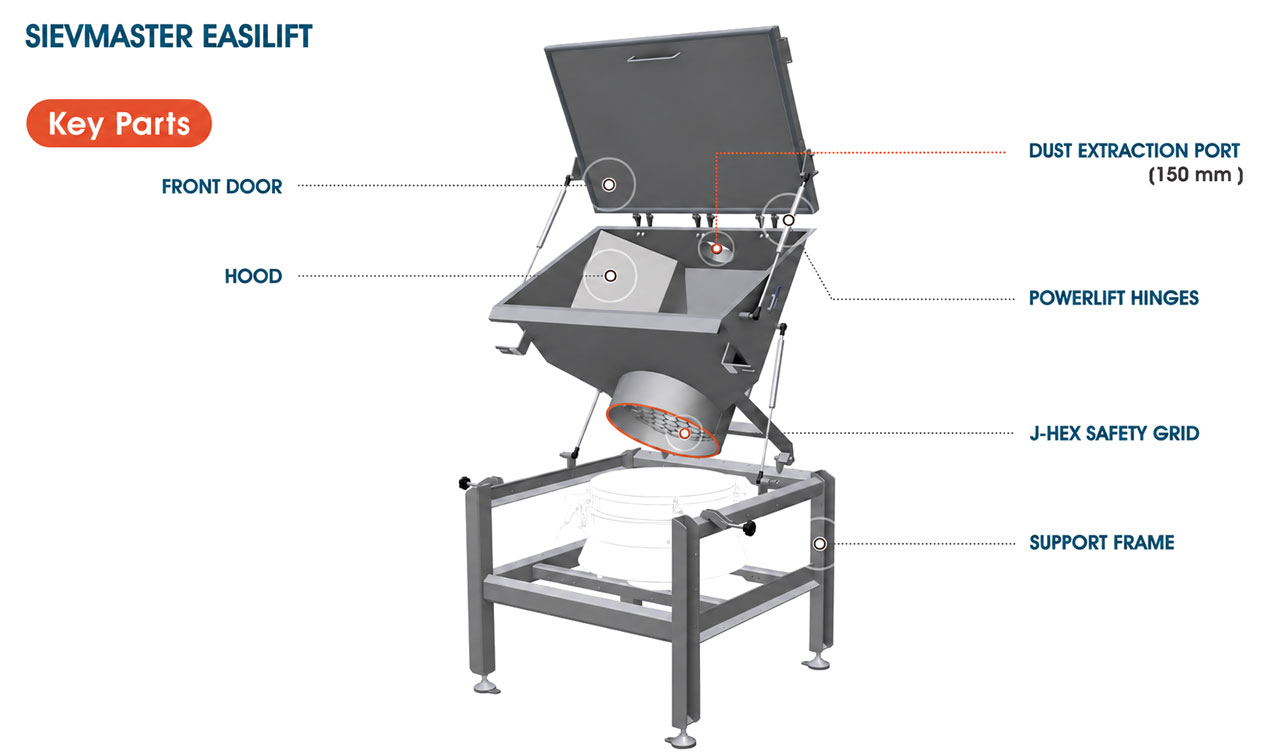
Accessible product contact areas also make inspection easier. Screen changes remain part of the overall cleaning procedure; the hopper, outlet, seals, and other affected areas must also be addressed for the next recipe.
Dust Control at the Bag Dump Station
Opening and emptying bags can release spice and seasoning dust into the work area. Dust extraction at the bag dump station draws airborne material away from the operator and into the dust collection system.
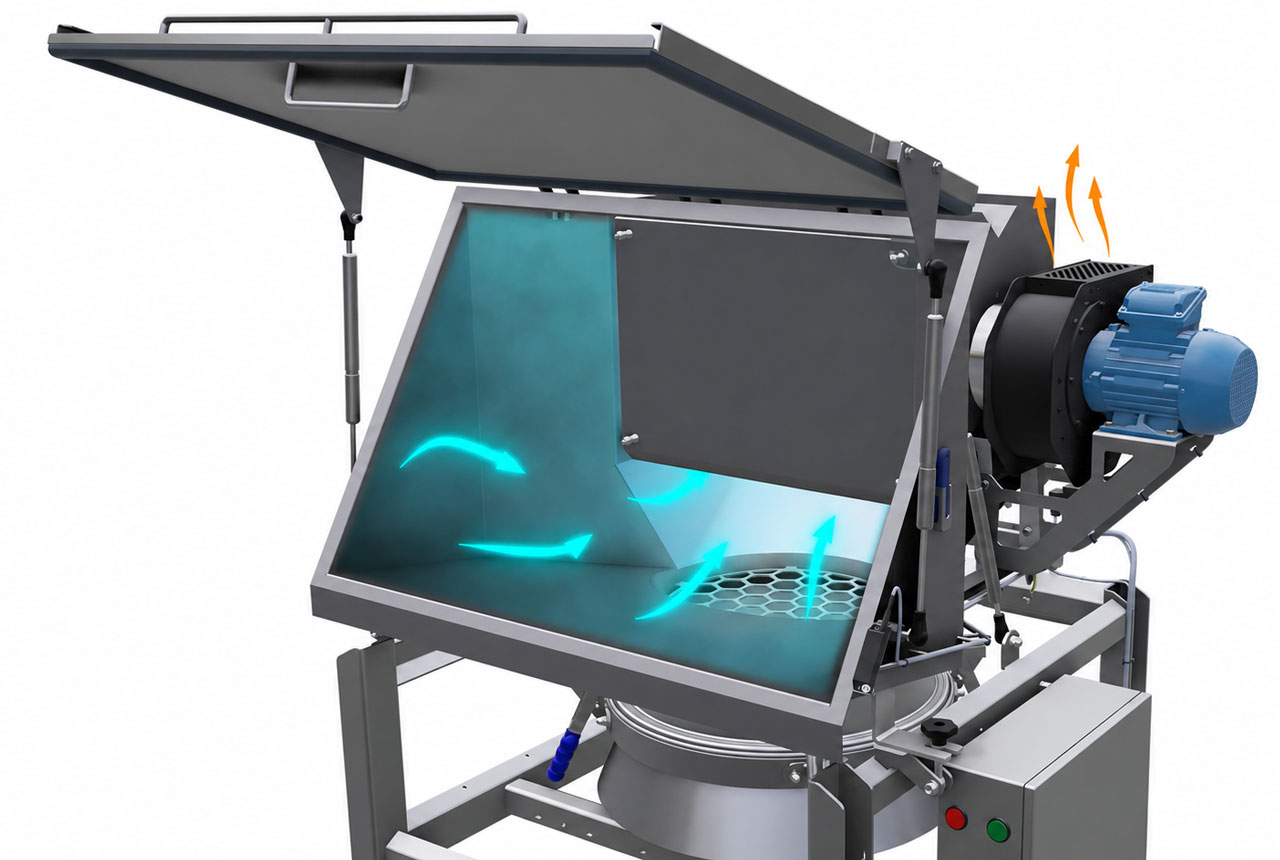
Depending on the installation, the station can connect to an existing extraction system or use an integral collector. An integral cartridge collector can return captured product to the process, where appropriate for the recipe and cleaning requirements.
For facilities processing multiple products, the dust collection components should be included in changeover planning along with the screen and hopper.
Discharging into a Blender, IBC, or Bulk Bag
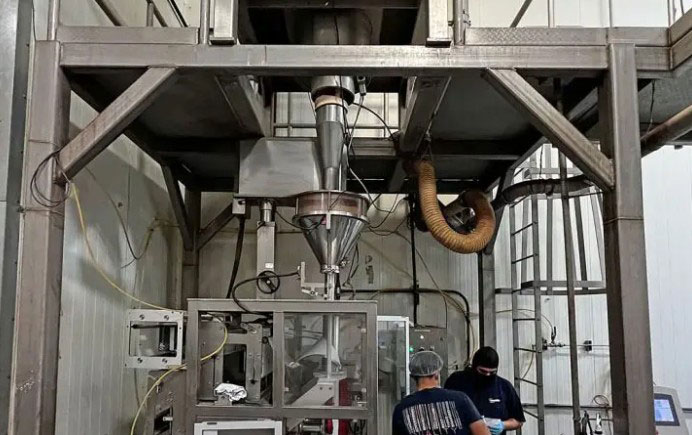
The bag dump screener can serve several ingredient handling arrangements. Screened material may discharge into an IBC bin for transfer to another area, into a hopper feeding a blender, or through a conveying system to downstream equipment. A similarly configured installation can also screen ingredients before bulk bag filling.
The receiving container, required connections, available headroom, and operator loading height should be considered together. Mobile configurations can provide flexibility when the station needs to move between production areas or to a cleaning location.
Frequently Asked Questions
Is check screening the same as check sifting?
In this application, check screening and check sifting describe the same basic task: passing usable ingredients through a selected screen while retaining unwanted oversize material. A bag dump station may also be called a sack tip station or bag tipping station.
Does oversized material discharge automatically?
That depends on the configuration. In batch check screening, retained oversize is removed during periodic cleanout. Continuous check screening uses a dedicated oversize outlet so rejected material can leave while the system operates. The expected amount of oversize and production schedule help determine which arrangement fits the process.
Can the system handle fine seasoning powders?
Fine powders may require additional consideration because of flow behavior and screen blinding. Ultrasonic screening systems are an option for suitable applications where fine material tends to block the mesh. Equipment and screen selection should be based on the actual ingredients and required throughput.
Can screening be added to an existing seasoning line?
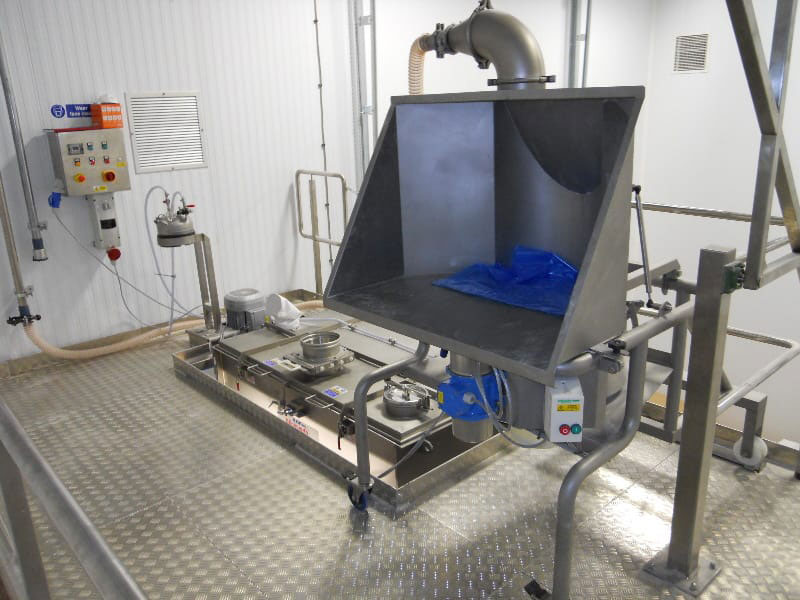
Yes. A check screener can be incorporated into an existing installation where space, capacity, and inlet and outlet connections permit. Material conveyed under vacuum or positive pressure requires screening equipment designed for those conditions.
Discuss Your Spice or Seasoning Screening Application
Tinsley Equipment Company can help select a bag dump station and check screening arrangement for your ingredient handling process. Share your ingredients, bag weights, batch sizes or required hourly capacity, intended particle sizes, cleaning requirements, and downstream equipment.
Learn more about industrial sifters, sieves, and screening equipment or contact Tinsley Equipment Company to discuss screening bagged ingredients before blending, transfer, or packaging.
Call: (979) 217-1480