

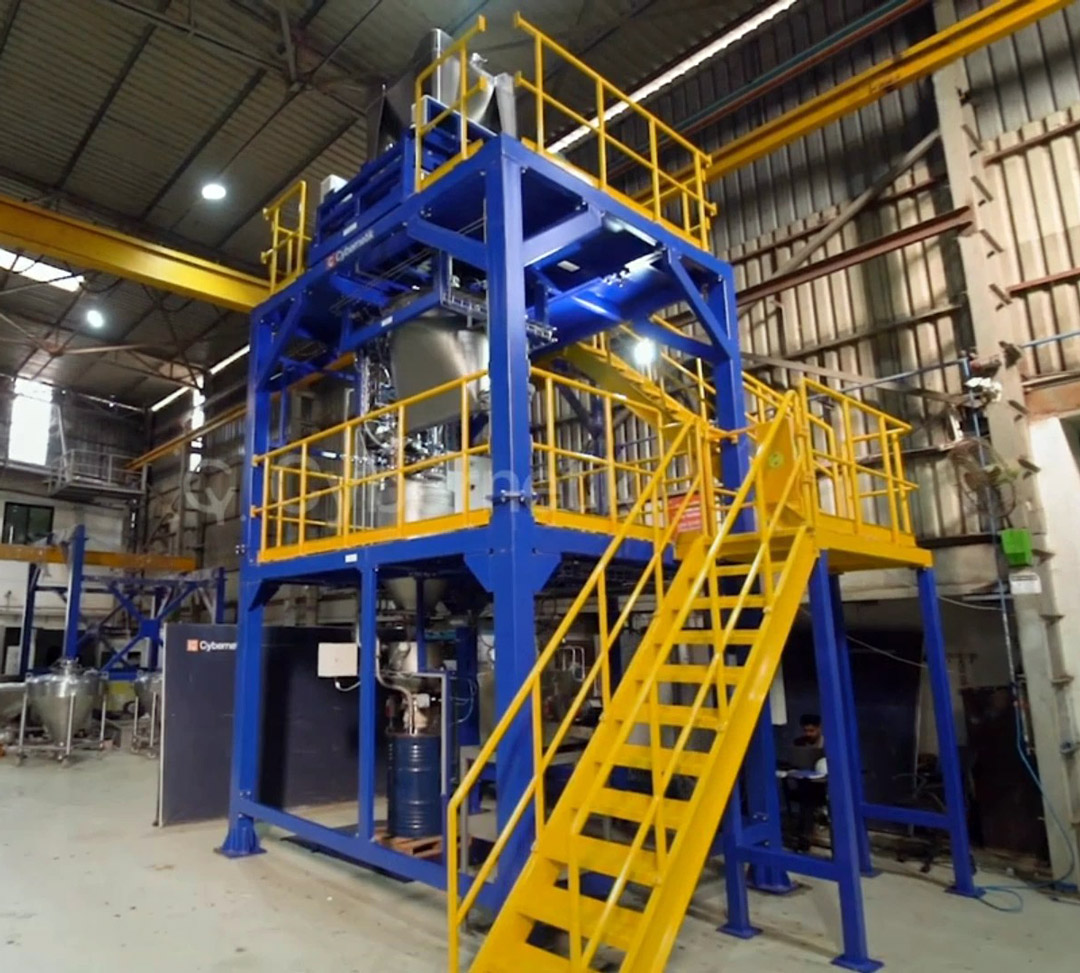
A rare earth metals producer needed a safe and controlled way to process rejected powder that could generate a large amount of heat when exposed to oxygen.
The material still had value and could be returned to the refining process, but it first had to be transferred from an intermediate bulk container, or IBC, without allowing an uncontrolled reaction to begin.
A custom material handling and controlled reaction system was designed to:
- Discharge powder from an IBC under a nitrogen and argon purge
- Prevent air from entering the transfer connection
- Meter the powder into an enclosed reaction chamber
- Introduce oxygen at a controlled rate
- Agitate and monitor the material during processing
- Collect and weigh the processed residue in sealed metal drums
The completed system combines controlled-atmosphere powder handling, precise feeding, process monitoring and sealed collection in one integrated structure.
Watch a Video

Ask a Question or Get a Quote
Call: (979) 217-1480

The Challenge of Handling Reactive Powder
During the early stages of production, the rejected powder could react rapidly when it came into contact with oxygen. This reaction generated significant heat, making ordinary open transfer methods unsuitable.
The material could not simply be dumped from the IBC into a hopper and exposed to the surrounding atmosphere. The facility needed a system that would maintain a controlled environment during unloading and transfer.
At the same time, the powder had to be fed into the reaction chamber at a predictable rate. Introducing too much material or oxygen too quickly could make the process difficult to control.
The solution was a vertically arranged system that moved the material from the IBC at the top, through the controlled reaction process, and into sealed drums at the bottom.
IBC Discharge Under Nitrogen and Argon Purge
A stainless steel IBC is positioned at the upper level of the system and locked in place over the discharge station.
Accurate positioning is important because the IBC outlet must connect properly with the receiving equipment below. The system uses a flexible chute with an inflatable seal to create an enclosed transfer path and help prevent air ingress.
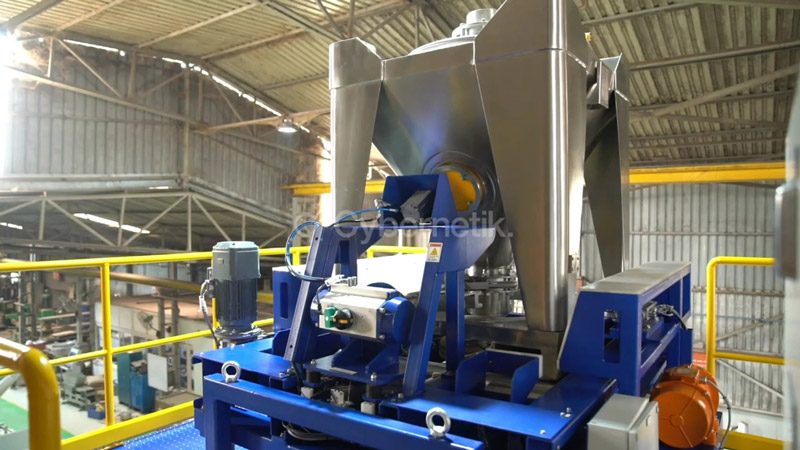
Before the IBC valve is opened, nitrogen and argon are used to purge the connection and maintain a controlled atmosphere around the powder transfer area.
The IBC outlet valve is then opened automatically, allowing the material to move into the feeding system without requiring an operator to manually open the container.
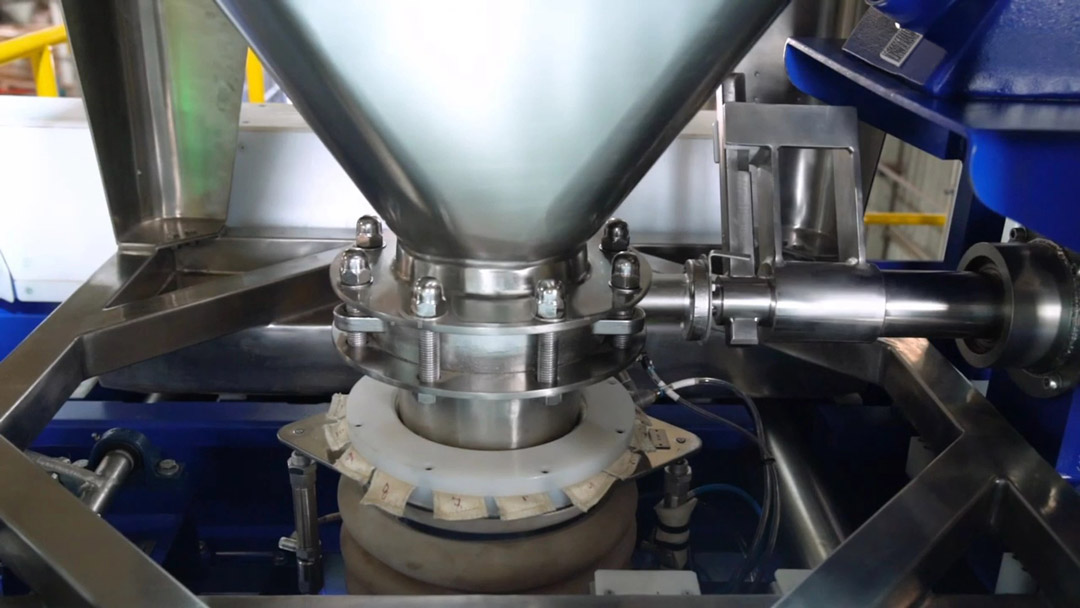
A mechanical knocker assists with material flow by applying force near the bottom of the tote. This helps retrieve powder that might otherwise remain inside the IBC or collect around the outlet.
Metered Feeding into the Reaction Chamber
After leaving the IBC, the powder enters an enclosed feeding system.
The feeder regulates the amount of material entering the reaction chamber. This controlled feed rate is an important part of the process because it allows the reaction to take place gradually instead of introducing an entire batch at once.
Metered feeding can also help provide more consistent operating conditions inside the vessel. The system can coordinate powder addition with gas flow, agitation and process monitoring.
Although this system was built for a rare earth refining application, the same general approach may be useful for other processes involving reactive, combustible or oxygen-sensitive powders.
Controlled Reaction and Oxidation
Inside the enclosed reaction chamber, oxygen is introduced at a controlled rate.
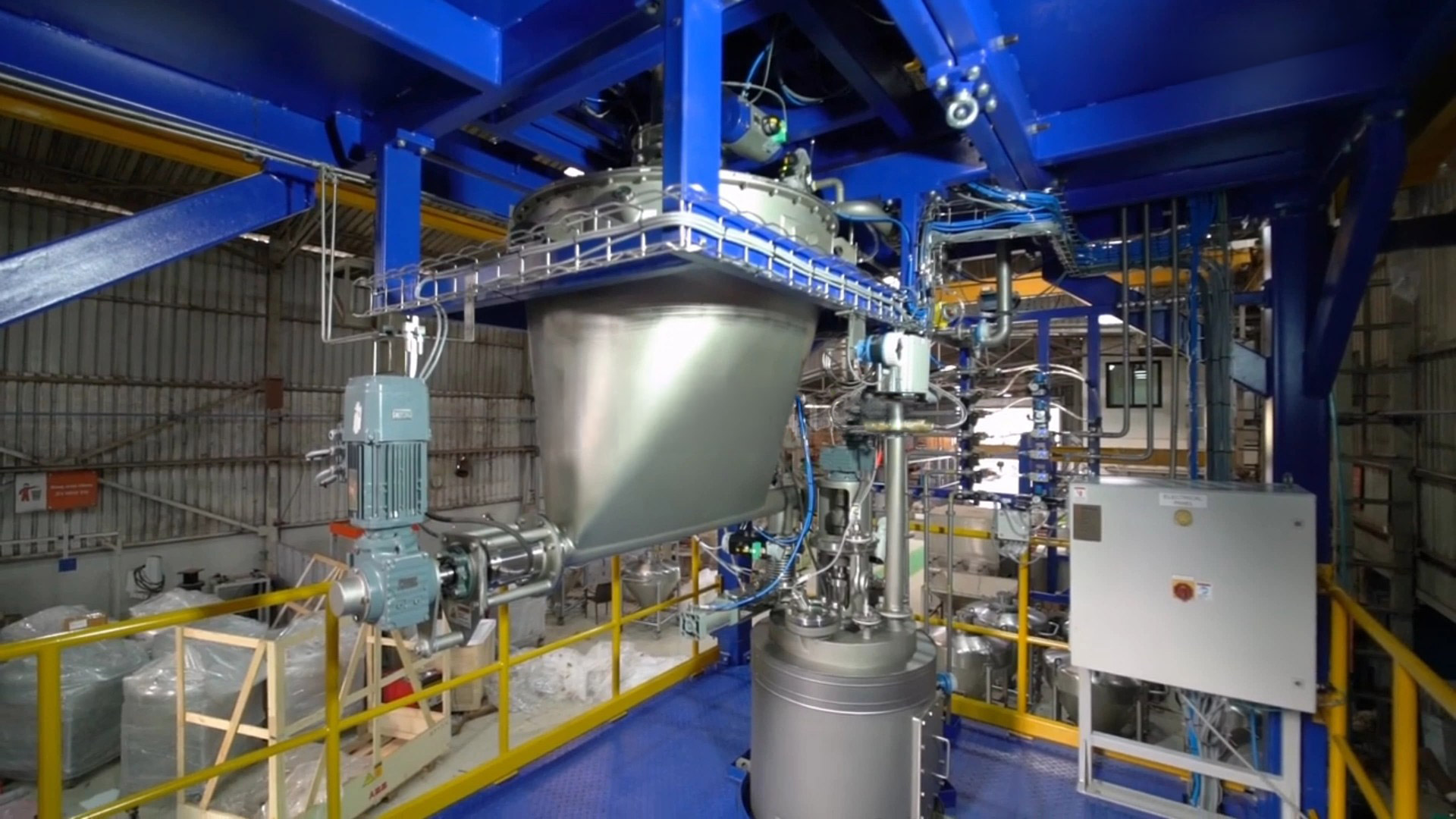
An agitator stirs the powder during processing, helping expose the material more evenly to the controlled gas flow. The system monitors the process while regulating material movement and reaction conditions.
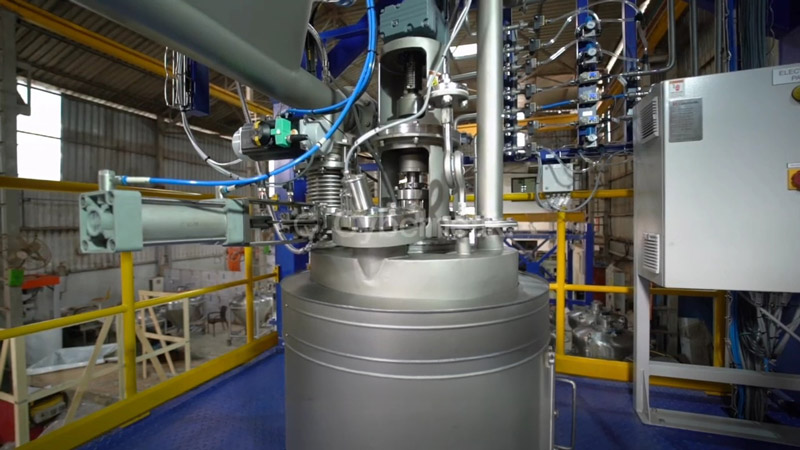
The equipment manufacturer describes this stage as combustion control. In this application, it can also be understood as a controlled reaction or controlled oxidation process.
Instead of allowing the material to react suddenly with atmospheric oxygen, the system creates an enclosed environment where oxygen addition, powder feed and agitation can be managed together.
The reaction equipment has a temperature rating of up to 400°C and is designed for continuous process monitoring.
Sealed Drum Collection and Weighing
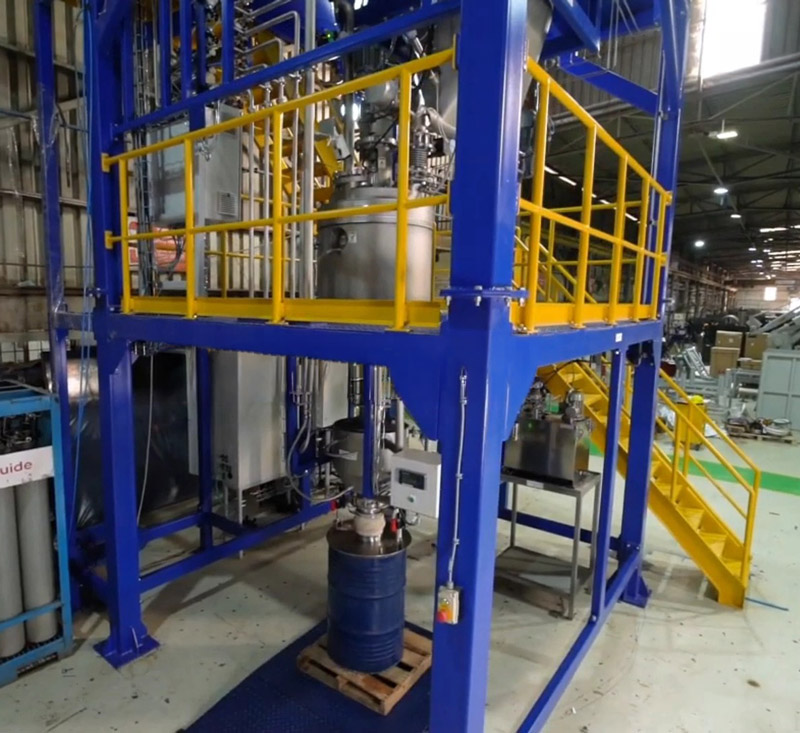
Once the batch has been processed, the resulting residue is discharged from the reaction vessel into a metal drum.
The drum connects to the discharge hopper through a flexible sealed connection. This keeps the collection process enclosed and helps prevent material from escaping into the surrounding area.
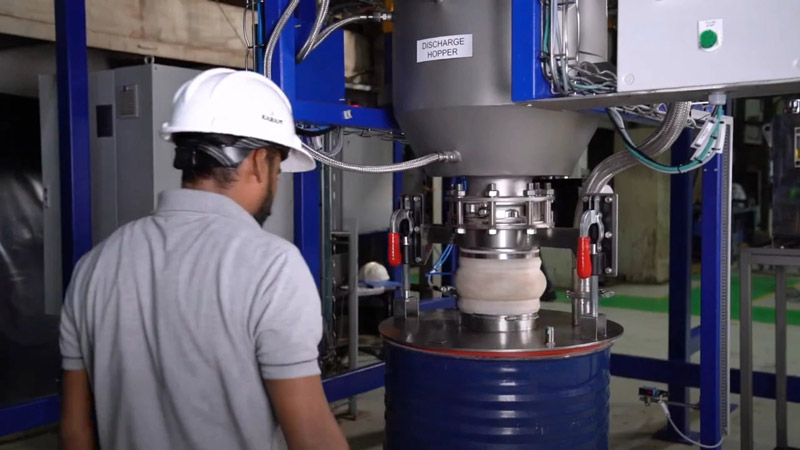
The collected residue is then weighed for process tracking and analysis.
After collection, the material can be recycled back into the beginning of the refining process rather than being discarded. This allows the producer to recover additional value from rejected material while maintaining better control over how it is handled.
Main Components of the System
The completed system includes:
- Elevated stainless steel IBC discharge station
- Tote positioning and locking system
- Flexible chute with inflatable seal
- Nitrogen and argon purging
- Automatic IBC valve opening
- Mechanical knocker for improved material retrieval
- Enclosed metering feeder
- Agitated reaction chamber
- Controlled oxygen and gas flow
- Process instrumentation and monitoring
- High-temperature equipment rated up to 400°C
- Sealed drum filling connection
- Residue weighing and collection
Other Applications for Controlled-Atmosphere Powder Handling
This system was designed for rejected material from a rare earth metals production process. However, the underlying design principles may also apply to other industrial applications where powders must be isolated from the surrounding atmosphere.
Possible applications may include:
- Reactive metal powder processing
- Oxygen-sensitive powder transfer
- Combustible powder handling
- Specialty chemical production
- Catalyst recovery
- Powder metallurgy
- Battery material processing
- Controlled oxidation processes
- Reprocessing of valuable off-specification material
- Metered feeding of powder into reactors
- Sealed powder recovery and collection
Every material and application is different. Gas selection, purge rates, temperature limits, material compatibility and process controls must be engineered around the specific powder and reaction involved.
Custom Systems for Difficult Powder Handling Applications
Reactive powders often require more than a standard feeder, hopper or IBC discharge station.
In this project, the complete solution had to control the atmosphere during unloading, meter the powder into the process, manage the reaction and collect the resulting material in sealed drums.
The result was an integrated gas-purged material handling and controlled reaction system that allowed rejected rare earth material to be processed and returned to the refining operation.
Ask a Question or Get a Quote
Tinsley Equipment Company can help identify and supply custom powder handling, feeding, processing and recovery systems for difficult industrial applications. Contact us to discuss your material, operating conditions and project requirements.
Call: (979) 217-1480